



What's Happening?
Cinematographer Hoyte van Hoytema has elaborated on his and director Christopher Nolan's approach to filming 'The Odyssey,' emphasizing an intimate perspective rather than an epic one. Despite the story's vast scale, van Hoytema told IndieWire that their
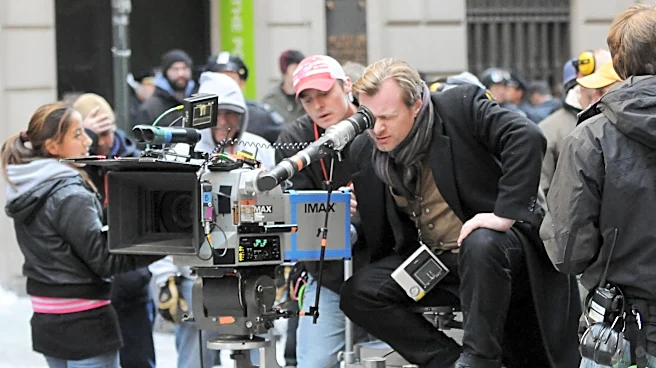
focus was on the characters' visceral experiences and emotions, not merely showcasing grand landscapes. The film, which was shot entirely in IMAX, aimed to expand the format's grammar beyond depicting only wonders of the world, using it for close-up, quiet dialogue scenes to capture human intimacy. This strategy built upon their previous work on 'Oppenheimer,' where IMAX was similarly used for both large-scale events and personal moments. The production faced significant logistical challenges, including the noise of IMAX cameras and the size of the equipment, which required innovative solutions like a specialized teleprompter system to allow actors to maintain eye contact.
Why It's Important?
This innovative approach to cinematography in 'The Odyssey' has significant implications for the U.S. film industry, particularly in how large-format filmmaking is perceived and utilized. By demonstrating that IMAX can effectively convey intimate human experiences, van Hoytema and Nolan are challenging conventional wisdom and potentially opening new creative avenues for filmmakers. This could lead to a broader adoption of IMAX for diverse genres, influencing technological advancements in camera and sound equipment to support such nuanced storytelling. For audiences, it promises a more immersive and emotionally resonant cinematic experience, potentially driving higher attendance for films that prioritize both visual grandeur and character depth. This shift could also impact film education and the training of future cinematographers.
What's Next?
The success of 'The Odyssey' in using IMAX for intimate storytelling may encourage other major studios and directors to experiment with large-format cameras in less conventional ways. This could lead to further investment in developing quieter, more versatile IMAX equipment and accessories, making the format more accessible for a wider range of productions. The techniques developed, such as the teleprompter system for actor eye-lines, could become standard practice in high-end productions. Additionally, the film's critical reception regarding its visual style will likely influence discussions around the artistic and technical capabilities of modern cinema, potentially setting new trends for visual storytelling in Hollywood.
Beyond the Headlines
The decision to prioritize intimacy within an epic narrative, and to use a technologically advanced format like IMAX to achieve it, speaks to a deeper artistic philosophy. It suggests a move away from spectacle for its own sake towards a more integrated approach where technology serves emotional storytelling. This challenges the notion that large-scale productions must sacrifice character depth for visual grandeur. The arduous nature of the shoot, as described by van Hoytema, also highlights the dedication and problem-solving required in modern filmmaking, where creative vision often pushes the boundaries of existing technology and logistical capabilities. This commitment to craft, even under difficult conditions, underscores the passion that drives significant cinematic achievements.