






What's Happening?
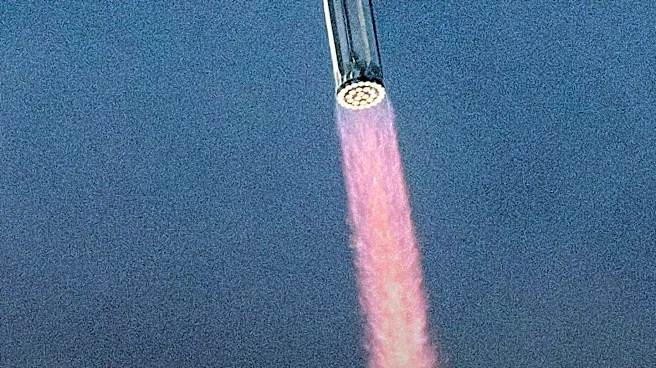
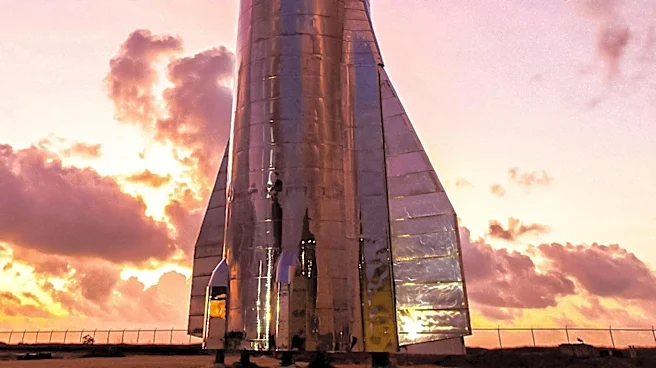
SpaceX, led by CEO Elon Musk, is preparing for another attempt to launch its Starship V3 mega rocket as early as next week. This follows an aborted launch attempt on July 16, 2026, at SpaceX's Starbase in Texas, where multiple engines failed to start.
Musk announced that two of the Raptor engines on the Super Heavy booster will be replaced before the next launch attempt. The Starship V3 is an upgraded version of SpaceX's rocket, designed for full reusability. This will be the second test flight for the V3 version, with the first flight occurring in May. The Federal Aviation Administration (FAA) has approved SpaceX's corrective actions, allowing the company to proceed with the next launch. The upcoming mission will also include the deployment of 20 Starlink V3 satellites, which are expected to burn up in Earth's atmosphere after providing data on the rocket's performance.
Why It's Important?
The successful launch of the Starship V3 is crucial for SpaceX as it aims to demonstrate the rocket's full reusability and address previous technical issues. This launch is significant for SpaceX's long-term goals, including using Starship for missions to the moon, such as the Artemis 4 mission in 2028, where it will carry astronauts to the lunar surface. Additionally, the launch comes after SpaceX's recent stock market debut, adding pressure for a successful mission to maintain investor confidence. The deployment of Starlink V3 satellites is also part of SpaceX's broader strategy to expand its satellite internet service, which has implications for global internet connectivity.
What's Next?
SpaceX plans to replace the faulty Raptor engines on the Super Heavy booster before the next launch attempt. The company will continue to address any technical issues to ensure a successful launch. The upcoming mission will be closely watched by industry stakeholders, investors, and the public, as it represents a critical step in SpaceX's ambitious plans for space exploration and satellite deployment. The outcome of this launch could influence future missions and SpaceX's ability to meet its goals for lunar and interplanetary travel.