




What's Happening?
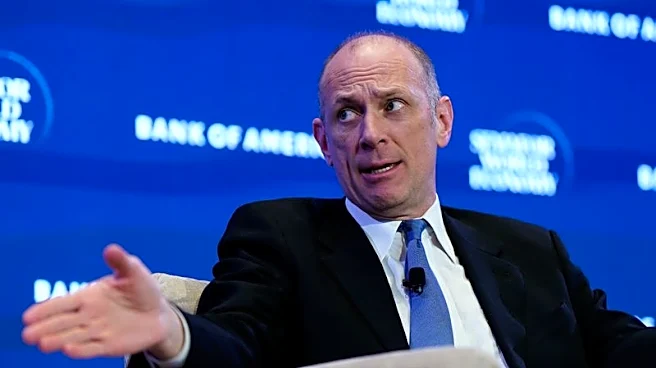
Wells Fargo CEO Charlie Scharf has identified interest rates and the speed of technological advancements as significant economic risks. This concern comes as Wells Fargo's net interest margin decreased to 2.43% in the third quarter from 2.61% a year prior.
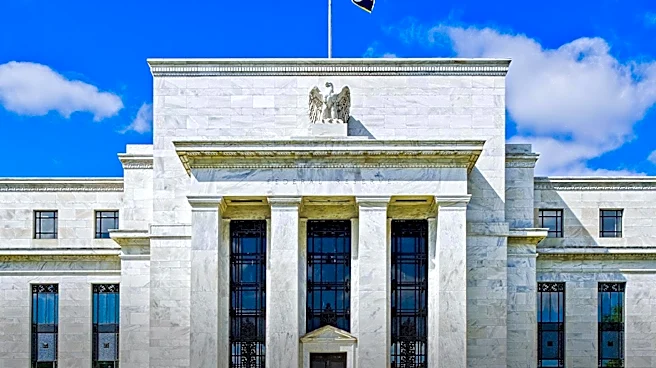
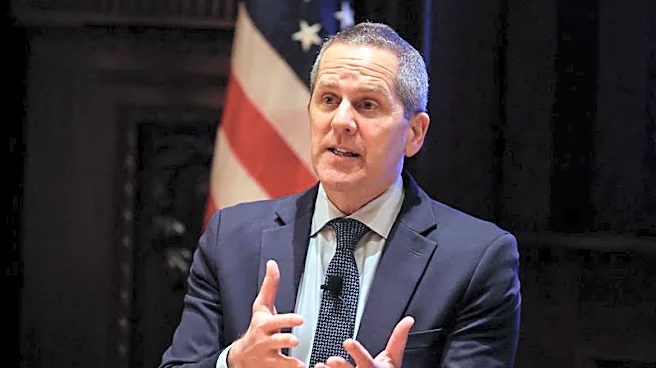
The decline is attributed to the growth of lower-yielding Markets assets and interest-bearing deposits. Despite this margin slip, the bank's net interest income saw a 5% increase. Scharf's apprehension regarding technology aligns with warnings from Fed Governor Michael Barr, who cautioned on November 16 about the potential for AI agents to accelerate bank runs, causing them to unfold in minutes. This highlights a growing concern within the financial sector about the rapid pace of technological change and its implications for financial stability.
Why It's Important?
The concerns raised by Charlie Scharf are important because they highlight critical vulnerabilities within the U.S. financial system. Fluctuations in interest rates directly impact bank profitability, as a shrinking net interest margin can reduce earnings, potentially affecting lending capacity and overall economic growth. The warning about AI-driven bank runs underscores a new and evolving risk. Traditional bank runs typically unfold over days, allowing for intervention, but AI's speed could compress this timeline dramatically, posing an unprecedented challenge to financial stability. This could lead to rapid liquidity crises, impacting not only individual banks but potentially the broader financial market. The implications extend to regulatory bodies, which would need to adapt quickly to mitigate such fast-moving threats, and to consumers, who could face disruptions in banking services and confidence.
What's Next?
In response to these identified risks, financial institutions and regulators are likely to intensify their focus on cybersecurity and the development of robust protocols to manage AI-driven financial activities. Banks may explore new strategies to optimize their net interest margins in a fluctuating rate environment, potentially through diversified investment portfolios or adjusted lending practices. Regulators, including the Federal Reserve, are expected to continue monitoring the integration of AI in banking and may propose new guidelines or regulations to address the risks of accelerated bank runs. This could involve stress tests specifically designed for AI-driven scenarios or enhanced real-time monitoring systems. The financial sector will also likely see increased investment in technologies that can detect and prevent rapid, automated withdrawals, aiming to maintain stability in an increasingly digital financial landscape.
Beyond the Headlines
The concerns voiced by Charlie Scharf and Fed Governor Michael Barr point to a deeper, systemic challenge at the intersection of finance and advanced technology. The potential for AI to accelerate bank runs introduces an ethical dimension regarding the autonomous decision-making capabilities of AI in critical financial operations. It raises questions about accountability if an AI system triggers a financial crisis. Legally, existing regulatory frameworks may be insufficient to address the speed and scale of AI-driven financial disruptions, necessitating new legislation or amendments. Culturally, a shift in public trust could occur if confidence in the stability of AI-managed financial systems erodes. This development could trigger a long-term shift towards more stringent oversight of AI in finance, potentially influencing the pace of technological adoption within the sector and reshaping the future of financial regulation globally.