




What's Happening?
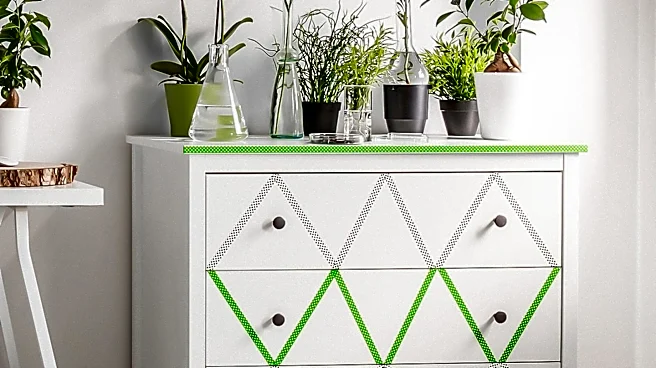
The IKEA BILLY shelf, a staple in many homes for its versatility and affordability, is being creatively transformed through upcycling. This process involves painting and modifying the shelf to create a personalized piece of furniture. MissPompadour, a company
specializing in paints, offers a guide on how to upcycle the BILLY shelf using their products. The process includes applying a primer and then painting with their Easy Eggshell paint, which is available in various colors. The paint is designed to adhere well to the shelf's smooth veneer, ensuring durability. Once painted, the shelf can be used in various settings, such as children's rooms or kitchens, and can be further modified by adding doors to convert it into a cupboard.
Why It's Important?
Upcycling furniture like the IKEA BILLY shelf is significant as it promotes sustainability by extending the life of existing products and reducing waste. This practice aligns with growing consumer interest in eco-friendly and personalized home decor solutions. By transforming a common piece of furniture into a unique item, individuals can express personal style while contributing to environmental conservation. Additionally, upcycling can be a cost-effective way to refresh home interiors without the need for new purchases, which can be beneficial in economic downturns. The trend also supports local businesses that provide materials and guidance for DIY projects.
What's Next?
As the trend of upcycling continues to grow, more consumers may seek out DIY projects and materials to personalize their homes. Companies like MissPompadour may expand their offerings to include more products and tutorials to meet this demand. Additionally, there could be an increase in community workshops and online platforms dedicated to sharing upcycling techniques and ideas. This movement may also influence larger furniture retailers to offer more customizable options or collaborate with upcycling experts to provide value-added services.
Beyond the Headlines
The upcycling trend reflects a broader cultural shift towards sustainability and individuality in consumer behavior. It challenges the traditional consumption model by encouraging people to see value in existing items rather than constantly seeking new products. This shift could lead to changes in manufacturing practices, with companies focusing more on durability and modularity to facilitate easy customization. Furthermore, upcycling can foster creativity and skill development, as individuals learn new techniques and gain satisfaction from creating something unique.