





What's Happening?
The upcoming FIFA Men's World Cup Final, set to take place at New Jersey's MetLife Stadium, will feature an all-star halftime show for the first time, similar to the Super Bowl. The show, curated by Coldplay's Chris Martin, will include performances by Madonna,
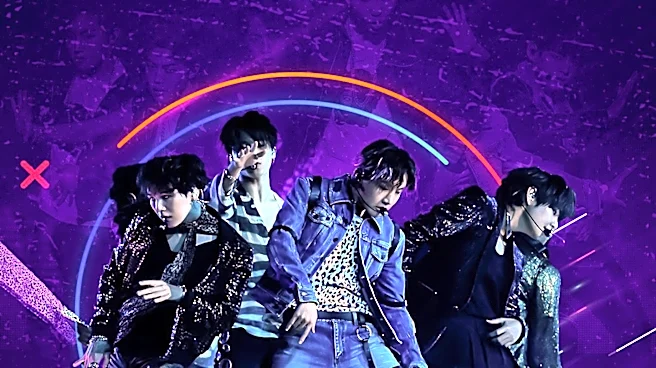
Justin Bieber, Shakira, and the K-pop group BTS. FIFA President Gianni Infantino has described the event as a 'groundbreaking spectacle' that aims to celebrate football, music, and shared values. However, the announcement has not been without controversy. Robert Smith, frontman of The Cure, expressed his disdain for the halftime show on social media, criticizing the concept as unnecessary pageantry. Smith's comments also touched on the involvement of President Trump, who is set to present the trophy to the winning team, further fueling the debate over the Americanization of the event.
Why It's Important?
The inclusion of a halftime show in the World Cup Final represents a significant shift in how the event is presented, potentially aligning it more closely with American sports entertainment traditions. This move could attract a broader audience, particularly in the U.S., where such spectacles are a staple of major sporting events. However, it also raises questions about the commercialization of the World Cup and the potential overshadowing of the sport itself. Critics like Robert Smith argue that the focus should remain on the game rather than the entertainment surrounding it. The involvement of high-profile artists and political figures like President Trump could further polarize opinions, impacting the event's reception both domestically and internationally.
What's Next?
As the World Cup Final approaches, reactions from fans and stakeholders will likely intensify. The halftime show is expected to draw significant media attention, potentially influencing future decisions about the format of international sporting events. FIFA's decision to include such a show may set a precedent for future tournaments, prompting discussions about the balance between sport and entertainment. Additionally, the presence of President Trump in the trophy presentation could lead to political discourse, especially given the current global political climate. Observers will be watching closely to see how these elements affect the overall perception of the World Cup.