






What's Happening?
The global carbon capture materials market is forecast to expand significantly, reaching an estimated USD 9.6 billion by 2036, growing at a Compound Annual Growth Rate (CAGR) of 13.1% from 2026. This growth is driven by increasing global focus on decarbonization,
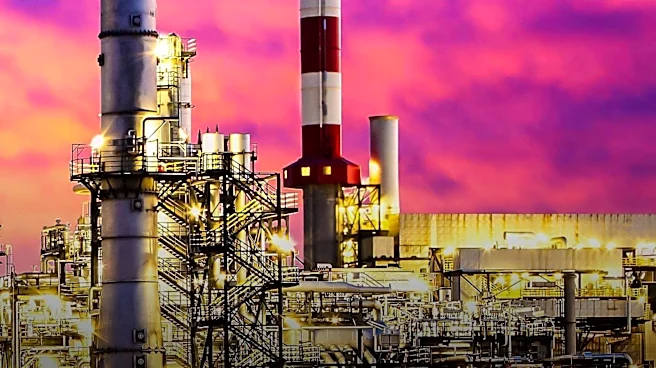
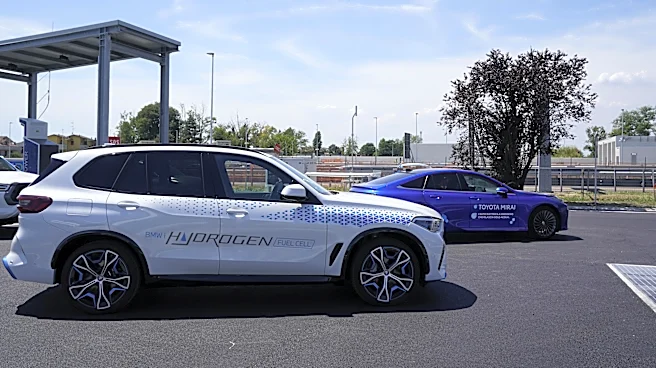
stringent emission regulations, and rising investments in Carbon Capture, Utilization, and Storage (CCUS) projects. North America currently holds the largest share of this market, with the United States leading due to tax incentives like the expanded 45Q tax credits under the Inflation Reduction Act. These incentives are stimulating project activity across various sectors, including natural gas processing, industrial manufacturing, hydrogen production, and power generation. Europe also remains a key market, supported by initiatives in Norway and the UK, and broader European climate policies encouraging investment in capture infrastructure. Asia-Pacific is expected to see the fastest growth, propelled by China's carbon neutrality commitments and expanding programs in countries like Japan, South Korea, India, and Australia. The market is seeing a shift towards advanced sorbents and membrane technologies, moving beyond traditional amine-based liquid solvents, to reduce energy requirements and operating costs.
Why It's Important?
The projected growth of the carbon capture materials market is crucial for the U.S. economy and its climate goals. The significant investment and policy support, particularly the 45Q tax credits, position the U.S. as a leader in this emerging industry. This fosters job creation in manufacturing, research and development, and project deployment across various industrial sectors. The development and commercialization of advanced carbon capture technologies are vital for hard-to-abate industries such as cement, steel, chemicals, oil and gas, and power generation, where emissions cannot be solely addressed by renewable energy. Success in this market can enhance U.S. competitiveness in green technologies and contribute to achieving national net-zero emission targets. However, challenges remain, including the high cost per tonne of captured carbon dioxide and the need for substantial capital and validation for next-generation materials. Limited carbon dioxide transport and storage infrastructure also poses a constraint, potentially delaying projects in regions without established networks. The market's expansion will benefit companies involved in material development, technology provision, and end-use industries, while also creating opportunities for investors in carbon removal technologies.
What's Next?
The market is expected to continue its trajectory of rapid growth, with ongoing technological innovation focusing on reducing the cost and energy intensity of carbon capture processes. The development of advanced sorbents, such as metal-organic frameworks and polymer-based sorbents, is anticipated to accelerate, moving from pilot projects to broader commercial deployment. Policy incentives, like those in the U.S. and Europe, will likely continue to play a critical role in driving investment and project development. There will be increased pressure on governments and industrial operators to adopt carbon capture technologies to meet net-zero emissions targets, particularly in sectors where process-related emissions are difficult to eliminate. Furthermore, the market will see continued expansion in direct air capture (DAC) and blue hydrogen production, supported by government-backed initiatives. Companies in the carbon capture value chain will need to focus on improving capture efficiency, material durability, and integrating materials into commercially scalable systems to capitalize on these opportunities.
Beyond the Headlines
The expansion of the carbon capture materials market signifies a broader shift in how industries and governments approach climate change mitigation. Beyond the immediate economic and environmental benefits, this trend highlights a growing recognition that technological solutions are indispensable for achieving ambitious climate targets, especially for sectors that cannot fully decarbonize through renewable energy alone. The emphasis on 'hard-to-abate' industries underscores a pragmatic approach to climate action, acknowledging the complexities of industrial processes. This also raises ethical considerations regarding the long-term storage of captured carbon and potential environmental impacts, as well as questions of environmental justice if these technologies are disproportionately deployed in certain communities. The reliance on policy incentives also points to the ongoing debate about the role of government intervention versus market-based solutions in driving climate innovation. The success of this market will not only depend on technological breakthroughs but also on robust regulatory frameworks, public acceptance, and international cooperation to ensure equitable and sustainable deployment.