







What's Happening?
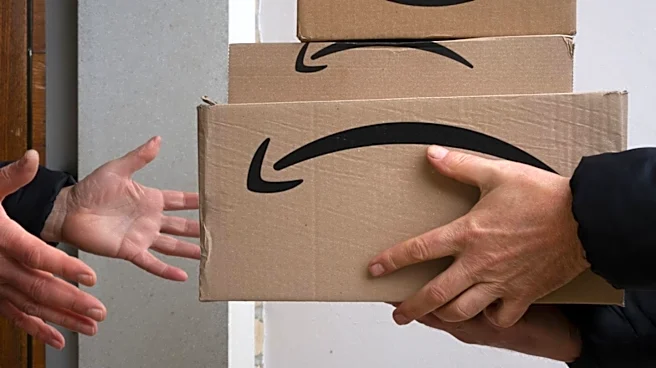
Amazon Flex is actively recruiting package delivery drivers, offering an earning potential of $19.50 to $30.50 per hour. This program allows individuals to use their personal vehicles and smartphones to deliver packages, providing a flexible work schedule.
Drivers can choose their delivery blocks, knowing in advance the duration of the block and the expected earnings. The program emphasizes flexibility, enabling drivers to work when it suits them, whether for supplemental income or to cover daily expenses. Amazon Flex also offers a rewards program, providing perks such as cashback and exclusive savings on essential items like tires, fuel, and auto services, as well as tools to manage insurance, expenses, and taxes. No prior experience is necessary, but applicants must be at least 21 years old, possess a valid U.S. driver's license, have access to a mid-sized or larger vehicle, and own an iPhone or Android smartphone.
Why It's Important?
This initiative by Amazon Flex is significant for the U.S. labor market, particularly for individuals seeking flexible employment options. It provides a pathway for many to earn income without the constraints of traditional employment, appealing to those who need to balance work with other commitments or who are looking for supplementary earnings. The program's structure, which allows drivers to choose their hours and provides upfront information on earnings, offers a degree of financial predictability and autonomy. Furthermore, the Amazon Flex Rewards program can help drivers reduce their operational costs, making the delivery work more financially viable. This model contributes to the gig economy, impacting how labor is structured and how individuals engage with work, potentially influencing other companies to adopt similar flexible employment strategies.
What's Next?
Amazon Flex is expected to continue expanding its network of delivery drivers across the U.S. as demand for package delivery remains high. The program's emphasis on flexibility and competitive hourly rates suggests it will likely attract a continuous stream of applicants. Future developments might include enhancements to the rewards program, further integration of technology to optimize delivery routes, and potential adjustments to earning structures based on market conditions and driver feedback. The success of Amazon Flex could also prompt other logistics and e-commerce companies to refine their own flexible delivery models, intensifying competition for independent contractors in the delivery sector. The program's growth will continue to shape the landscape of last-mile delivery services.
Beyond the Headlines
The Amazon Flex program highlights broader trends in the U.S. economy, particularly the growth of the gig economy and the increasing demand for flexible work arrangements. While offering significant benefits in terms of autonomy and supplemental income, it also raises questions about the nature of employment, worker benefits, and the long-term stability of such roles. The classification of drivers as self-employed contractors means they do not receive traditional employee benefits like health insurance or paid time off, which can have long-term implications for individual financial security and public welfare programs. The program's success also underscores the evolving consumer expectation for rapid and convenient delivery, pushing the boundaries of logistics and supply chain management. This shift could lead to further automation in delivery services, potentially altering the demand for human drivers in the future.