

What's Happening?
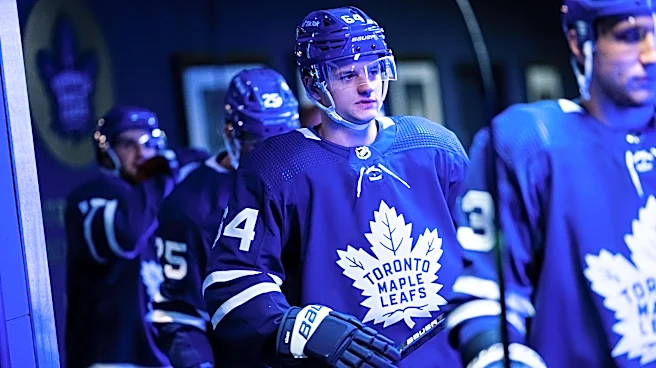
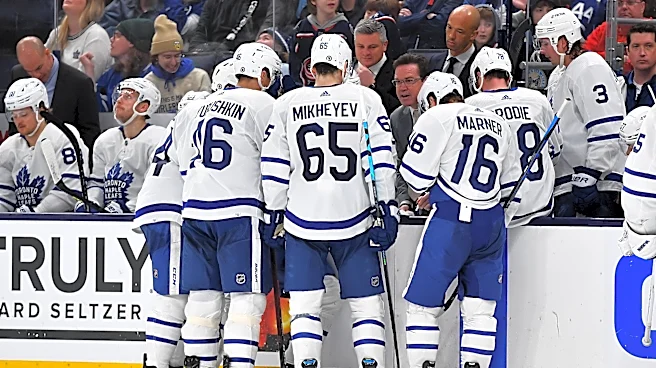
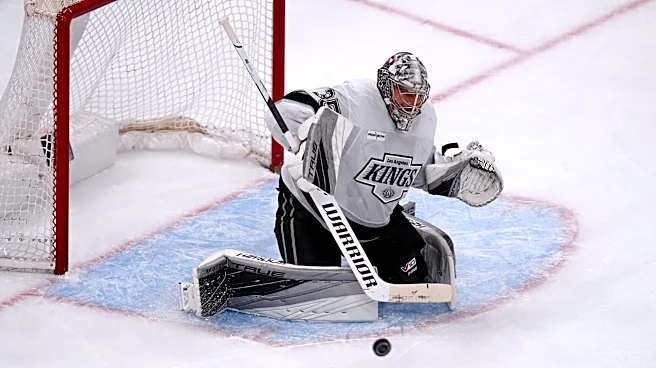
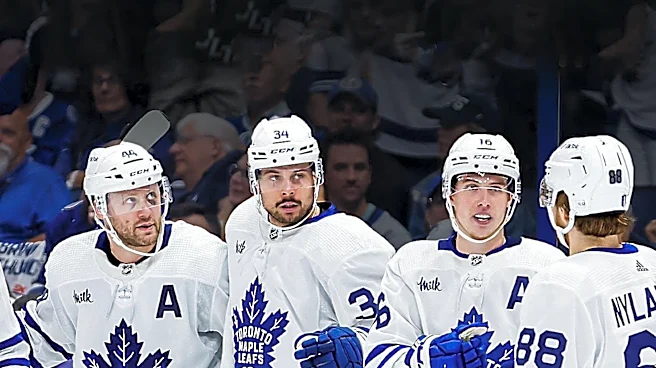
The Toronto Maple Leafs continue to face significant defensive challenges under head coach Jim Hiller, despite his appointment being intended to improve the team's defensive structure. Hiller, who previously coached the Los Angeles Kings to a strong defensive record,
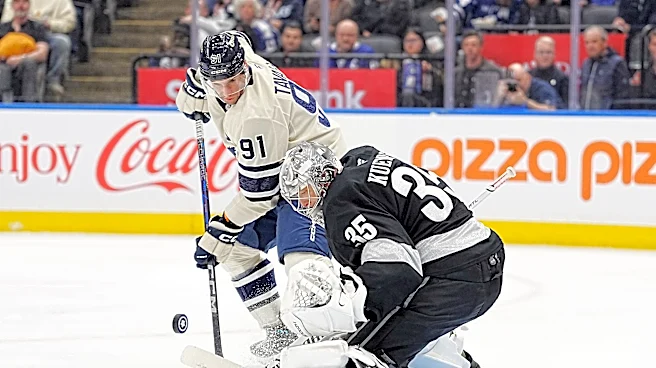
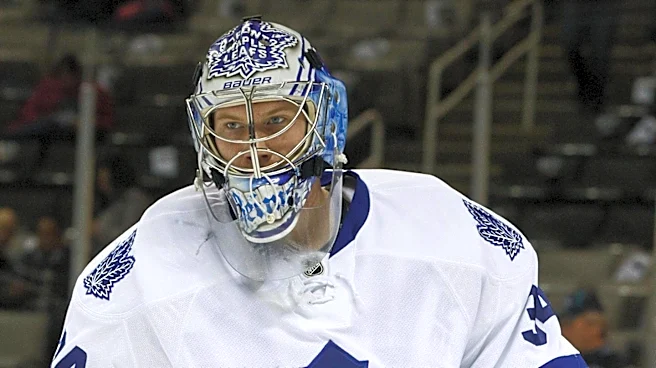
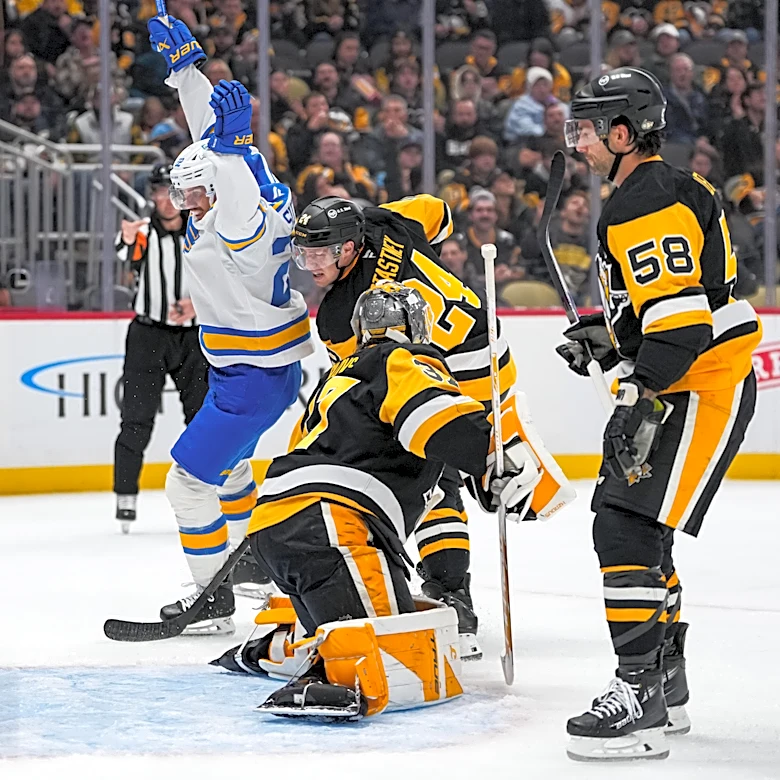
has seen the Maple Leafs' goals-against average remain largely unchanged, moving from 3.6 goals per game under former coach Craig Berube to 3.52 under his leadership. This lack of improvement is compounded by goaltending issues, particularly with 37-year-old Sergei Bobrovsky, whose save percentage has dropped to .874 during the team's recent seven-game losing streak. Coach Hiller has indicated that there are no workload restrictions on Anthony Stolarz, suggesting a potential shift in goaltending strategy as Bobrovsky struggles.
Why It's Important?
The persistent defensive struggles and goaltending woes are critical for the Toronto Maple Leafs, a team with high expectations. The failure to improve defensively under a coach specifically hired for that purpose raises questions about the team's overall strategy and player accountability. The underperformance of a high-salaried goaltender like Sergei Bobrovsky significantly impacts the team's ability to win games, placing immense pressure on the coaching staff to make difficult decisions regarding player deployment. This situation could lead to a crisis of confidence within the team and among fans, potentially affecting future player acquisitions and the long-term stability of the coaching staff. The team's inability to secure wins despite offensive talent underscores the importance of a balanced team structure.
What's Next?
With the Toronto Maple Leafs mired in a losing streak and defensive issues, coach Jim Hiller is under increasing pressure to implement effective changes. The decision to remove workload restrictions on Anthony Stolarz suggests that he may see more playing time, potentially becoming the primary goaltender if Sergei Bobrovsky's struggles continue. Hiller will need to re-evaluate defensive strategies and player combinations to improve the team's ability to protect leads and limit opposing scoring chances. If the team's performance does not improve rapidly, Hiller's position as head coach could become precarious, especially given the high expectations in the Toronto market. The upcoming games will be crucial in determining the immediate future of the team's leadership and strategic direction.
Beyond the Headlines
The ongoing struggles of the Toronto Maple Leafs highlight a common challenge in professional sports: the difficulty of translating a coach's past success with one team to another. Hiller's inability to replicate the defensive prowess he achieved with the Kings suggests that team dynamics, player skill sets, and existing team culture play a significant role in a coach's effectiveness. The situation also brings into focus the delicate balance between player-friendly coaching and the need for strict accountability, especially when a team is underperforming. The high-stakes environment of professional hockey means that coaches must quickly adapt and deliver results, or face the consequences, regardless of their previous achievements or philosophical approach.