




What's Happening?
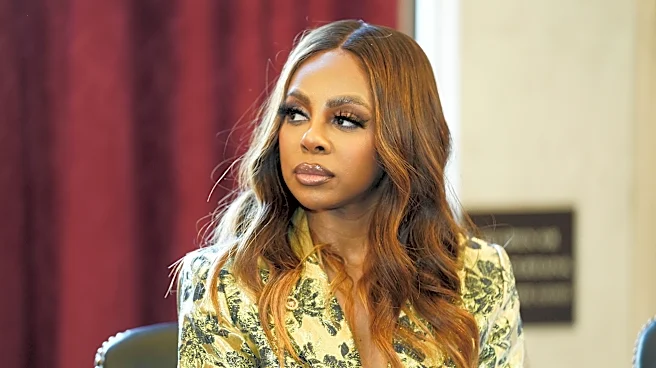
Ashley Darby, a cast member of 'The Real Housewives of Potomac' (RHOP), recently disclosed details about a 'heated' altercation she had with former co-star Candiace Dillard Bassett during the filming of 'Real Housewives Ultimate Girls Trip' (RHUGT). According
to Darby, this significant confrontation was ultimately cut from the final broadcast of the show. Darby described the fight as intense, stating, 'She and I really got to scrapping,' and that it 'got really heated' while filming in Atlanta. She characterized her own behavior during the argument as 'clapping' and 'jumping around,' indicating a high level of emotional engagement. The conflict reportedly stemmed from unresolved issues between the two women, reminiscent of their past interactions on RHOP. Despite the intensity, Darby mentioned that the two eventually transitioned to a more normal conversation, even sharing pictures of Dillard Bassett's son, Jett. Darby also commented on other RHOP cast members, suggesting Wendy Osefo is most likely to 'skew a story' and Robyn Dixon is prone to becoming a meme due to being 'performative.'
Why It's Important?
This revelation is important for fans of the 'Real Housewives' franchise, particularly 'The Real Housewives of Potomac,' as it sheds light on unaired content that could alter perceptions of cast dynamics and individual narratives. The decision to cut such a 'heated' fight from RHUGT suggests editorial choices that shape the public's understanding of reality television events. For the cast members, particularly Ashley Darby and Candiace Dillard Bassett, the disclosure of this unaired conflict could reignite past tensions or provide new context to their ongoing relationships, both on and off-screen. It also highlights the curated nature of reality television, where significant interactions may be omitted, potentially influencing audience interpretations of character arcs and interpersonal drama. The comments about other cast members, such as Wendy Osefo and Robyn Dixon, further contribute to the ongoing narrative and potential future conflicts within the RHOP series, impacting their public image and fan engagement.
What's Next?
The disclosure of this unaired fight could lead to several immediate consequences within the 'Real Housewives' community. Fans may demand more transparency regarding cut scenes, potentially pressuring networks or production companies to release unaired footage or provide explanations for editorial decisions. It is also likely to spark further discussion and speculation among viewers and reality television commentators about the true nature of the relationships between Ashley Darby and Candiace Dillard Bassett. Dillard Bassett herself may respond to Darby's claims, potentially offering her own perspective on the altercation and its omission from RHUGT. This could lead to a public exchange between the two, further fueling fan interest and potentially impacting their future involvement in the franchise. Additionally, Darby's comments about Wendy Osefo and Robyn Dixon could create new tensions within the current season of RHOP, leading to on-screen confrontations or discussions about these remarks.
Beyond the Headlines
Beyond the immediate drama, this incident touches upon broader implications concerning the authenticity and ethical considerations of reality television. The decision to cut a 'heated' fight raises questions about how much of 'reality' is truly presented to the audience and the extent to which narratives are constructed or manipulated for entertainment purposes. This practice can influence public perception of individuals and their conflicts, potentially leading to misinterpretations or an incomplete understanding of events. Ethically, it prompts a discussion about the responsibility of producers to accurately represent interactions, especially when they involve personal disputes. Culturally, reality television plays a significant role in shaping societal views on interpersonal relationships and conflict resolution, and the selective editing of such content can subtly influence these perceptions. The long-term shift could involve increased scrutiny from viewers and media watchdogs regarding the editorial practices of reality TV, pushing for greater transparency and a more faithful portrayal of events.