





What's Happening?
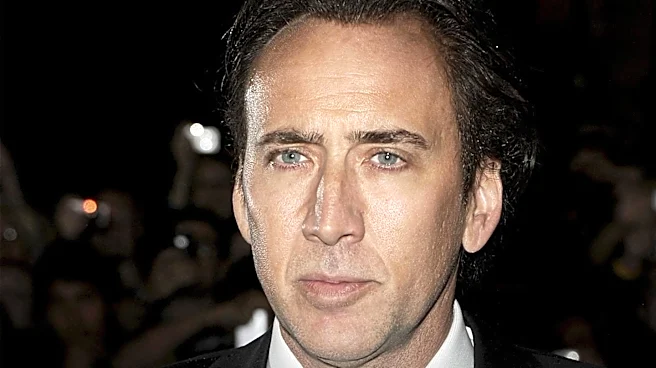
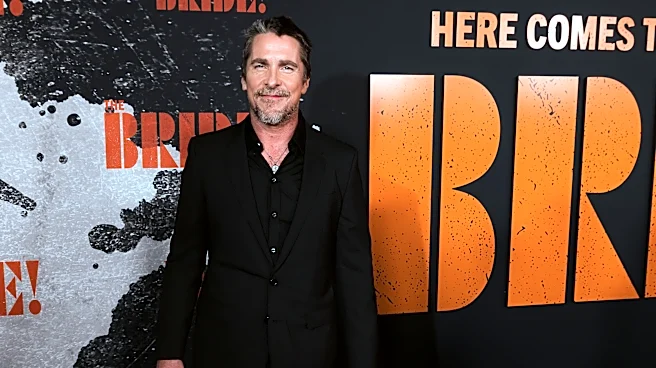
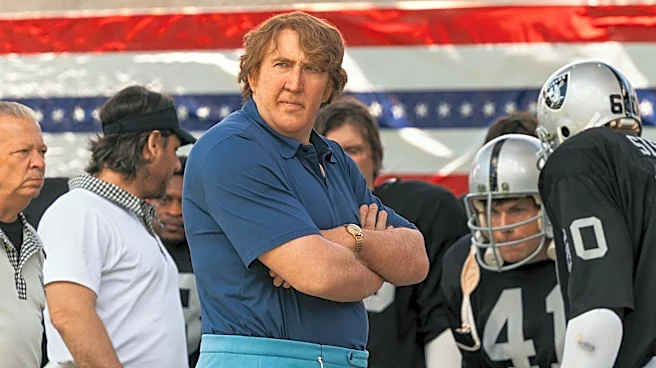
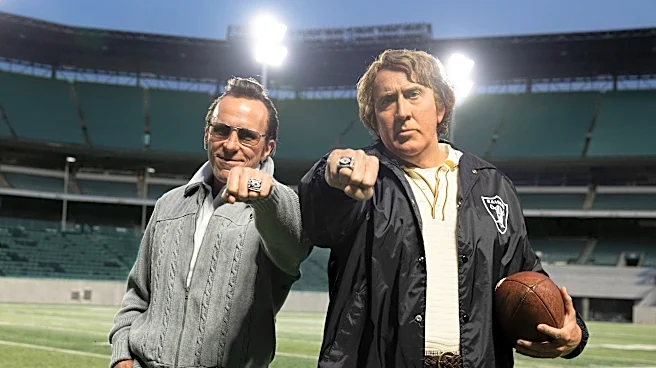
David O. Russell's new biopic, 'Madden,' is generating significant discussion for its unconventional and impressionistic portrayal of football legend John Madden. The film, reportedly made with a $75 million budget from Amazon, stars Nicolas Cage as John Madden and Christian
Bale in full prosthetics. Critics describe the 110-minute movie as a 'fever dream' and 'impressionistic,' deviating from traditional biopic structures. Cage's performance as Madden is characterized as theatrical and cartoonish, with an acting style he refers to as 'Western Kabuki,' which prioritizes heightened theatricality over naturalism. The film also features Shane Gillis as Vince McGarry, a Raiders superfan, Marshawn Lynch as an EA programmer, and John Mulaney as Trip Hawkins, with Mulaney's performance noted for its exaggerated delivery. Despite its chaotic structure and shifting tone, the film is described as highly watchable, prompting viewers to question its creative choices.
Why It's Important?
The release of 'Madden' is significant for the entertainment industry as it challenges conventional biopic filmmaking and studio investment norms. Amazon's reported $75 million investment in a film described as 'unhinged' and 'impressionistic' raises questions about risk assessment and creative freedom in major studios. The film's polarizing reception, with some critics calling for Razzies while others find it fascinating, highlights a potential shift in audience and critical appreciation for experimental cinema. Nicolas Cage's 'Kabuki' style performance in portraying a beloved American figure like John Madden could redefine expectations for biographical roles, potentially influencing future casting and directorial approaches. The film's watchability, despite its perceived flaws, suggests that unconventional narratives and performances can still captivate audiences, even if they defy traditional critical metrics of 'good' filmmaking.
What's Next?
The immediate future for 'Madden' will likely involve continued debate among critics and audiences regarding its artistic merit and commercial viability. The film's polarizing nature could lead to strong word-of-mouth, potentially attracting viewers curious about its unique approach. Industry discussions may focus on whether this type of experimental, high-budget biopic represents a new trend or an outlier in Hollywood. The performances of Nicolas Cage and Christian Bale, particularly Cage's 'Western Kabuki' style, will likely be analyzed for their impact on their respective careers and the broader acting landscape. The film's reception could also influence Amazon's future investment strategies in unconventional projects, potentially opening doors for more experimental directors or leading to a more cautious approach depending on its ultimate financial and critical outcome.
Beyond the Headlines
Beyond its immediate reception, 'Madden' could spark deeper conversations about the purpose and boundaries of biographical films. By eschewing naturalism and traditional narrative arcs, the film challenges the expectation that biopics must faithfully recreate reality. This approach raises ethical questions about the portrayal of real, beloved figures in a highly stylized and potentially caricatured manner. The film's 'impressionistic' style might be seen as a commentary on memory, perception, and the subjective nature of historical representation. Furthermore, the significant studio investment in such an unconventional project could signal a growing appetite for artistic risk-taking in an industry often criticized for its formulaic output. This could lead to a re-evaluation of what constitutes 'success' in cinema, moving beyond mere box office numbers to include artistic innovation and the generation of cultural discourse.