




What's Happening?
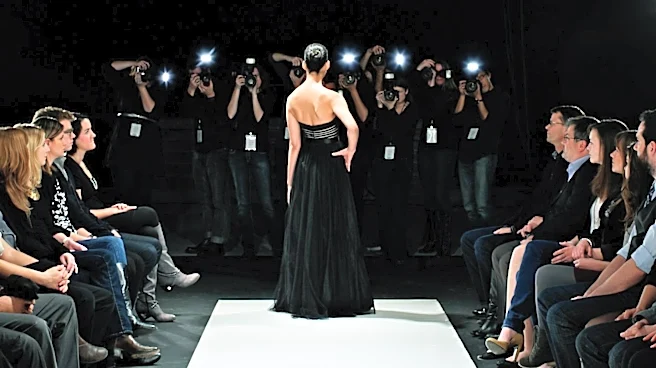
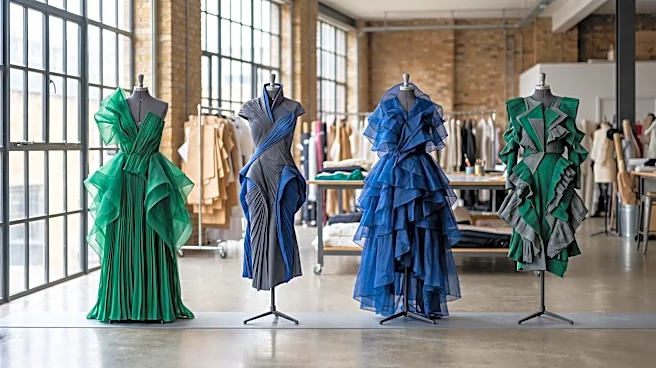
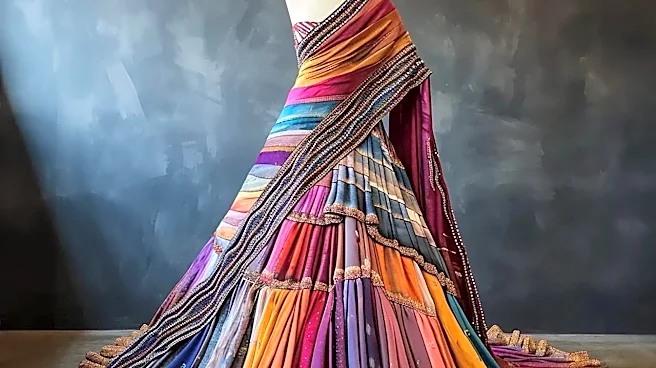
Designer Oluwakanyinsola Onalaja successfully prepared her debut collection for London Fashion Week within three months, despite a fire destroying over a decade of her work. She leveraged Adobe Firefly, an artificial intelligence tool, to accelerate her design
and sampling processes. This allowed her to focus more on the craftsmanship of each piece, rather than being bogged down by the initial stages of design. The use of AI in this context highlights its role in enabling creativity and efficiency, particularly when designers face significant time constraints and unexpected challenges. The technology did not dictate the creative vision but rather facilitated its realization under extraordinary pressure.
Why It's Important?
The adoption of AI by designers like Onalaja signals a significant shift in the fashion industry, demonstrating how technology can serve as a crucial tool for resilience and innovation. This development is important for U.S. fashion businesses and designers as it showcases a practical application of AI that can mitigate risks and accelerate production cycles. For smaller brands or independent designers, AI tools could level the playing field by providing access to advanced design capabilities that were once exclusive to larger, more resourced companies. This could lead to increased competition and a more dynamic market, potentially influencing investment in AI technologies across various creative sectors in the U.S.
What's Next?
The successful integration of AI in Onalaja's London Fashion Week preparation could encourage broader adoption of similar technologies within the U.S. fashion industry. We may see more design schools incorporating AI tools into their curriculum, and fashion houses investing in AI-powered design platforms. This could lead to faster trend cycles, more personalized fashion, and potentially more sustainable production methods by optimizing material use and reducing waste. The conversation around AI in creative fields is likely to shift from concerns about job displacement to exploring how AI can augment human creativity and problem-solving, particularly in crisis situations.
Beyond the Headlines
This event raises deeper questions about the evolving relationship between artificial intelligence and human creativity. While AI is often viewed as a potential threat to creative professions, Onalaja's experience demonstrates its capacity as a powerful enabler, allowing artists to overcome significant obstacles and bring their visions to life under extreme duress. This case could set a precedent for how AI is perceived and utilized in other creative industries, from film and music to architecture and literature. It underscores the ethical consideration of AI as a tool for empowerment, rather than replacement, fostering a future where technology enhances human potential rather than diminishing it.