





What's Happening?
The Laurentians region in Quebec, Canada, is showcasing its appeal for guided cycling trips, emphasizing a gentler and more accessible form of adventure travel. This initiative comes in anticipation of the Adventure Travel Trade Association’s 2026 World
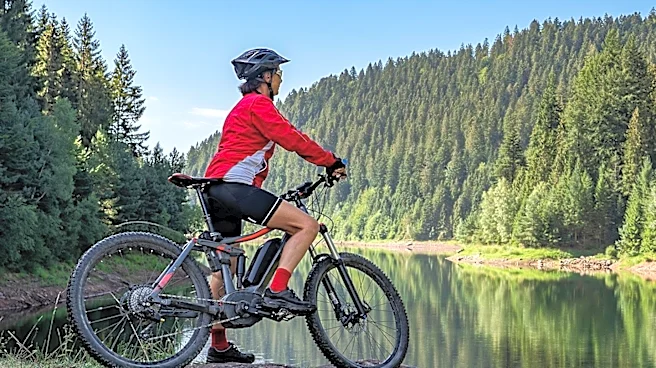
Summit in Quebec City. A multi-day cycling journey, documented by journalist Carolyn B. Heller, highlighted routes like Le P'tit Train du Nord and the Corridor Aerobique. The trip demonstrated how e-bikes and mixed-terrain paths can broaden participation in active travel. Overnight stays at locations such as Hotel Uniq, a glamping-style camp, and Selenia Lodge, offered a 'soft-adventure' experience, blending physical activity with comfort, sociability, lakeside relaxation, and regional food. The narrative positions the Laurentians as a destination where adventure is defined by personal challenge and freedom rather than speed or difficulty, accommodating various skill levels and preferences.
Why It's Important?
This focus on 'soft adventure' travel in the Laurentians is significant for the U.S. tourism industry and travelers. It signals a growing trend towards more inclusive and less physically demanding active vacations, potentially attracting a wider demographic of U.S. tourists who might be hesitant about traditional, high-intensity adventure travel. The use of e-bikes and varied terrain makes these experiences accessible to individuals with different fitness levels, expanding the market for cycling holidays. For U.S. tour operators and travel agencies, this presents an opportunity to develop and market similar 'soft adventure' packages, catering to a broader client base. The emphasis on comfort, local culture, and social interaction, alongside physical activity, aligns with evolving consumer preferences for holistic travel experiences. This approach could also influence how U.S. destinations with similar natural landscapes develop their own adventure tourism offerings, prioritizing accessibility and diverse appeal.
What's Next?
Following the promotion of the Laurentians' soft adventure offerings, it is likely that U.S. travel companies and adventure tourism providers will observe the success of this model, especially in the lead-up to the 2026 World Summit. There could be an increased focus on developing and marketing similar accessible adventure travel options within the United States. This might involve expanding e-bike tour availability, creating more mixed-terrain routes, and integrating glamping or comfortable lodge stays into active itineraries. Major stakeholders, including U.S. tourism boards and outdoor recreation companies, may explore partnerships to enhance infrastructure and services that support 'soft adventure.' Additionally, the Adventure Travel Trade Association's 2026 summit could serve as a platform for further discussions and collaborations on making adventure travel more inclusive, potentially leading to new industry standards or best practices that U.S. operators will adopt.
Beyond the Headlines
The rise of 'soft adventure' travel, as exemplified by the Laurentians' approach, reflects a deeper cultural shift in how leisure and personal challenge are perceived. It moves beyond the traditional, often competitive, view of adventure as solely about extreme physical feats, embracing a more mindful and experiential engagement with nature and local culture. This trend has ethical implications, promoting inclusivity by making outdoor activities accessible to a broader range of ages and physical abilities, thereby democratizing adventure. It also highlights a growing consumer desire for authenticity and connection, where the journey's pace allows for deeper immersion in the environment and community. Long-term, this could lead to a re-evaluation of infrastructure development in natural areas, prioritizing sustainable and accessible designs over those catering exclusively to elite athletes, fostering a more equitable and environmentally conscious tourism industry.