



What's Happening?
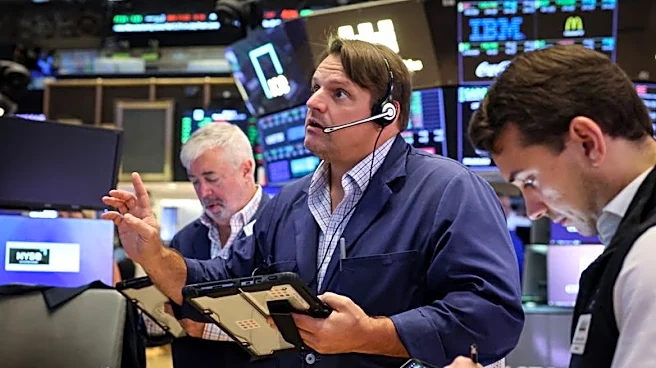
Despite a growing push from traders and exchanges like Nasdaq and NYSE Arca to extend trading hours to nearly 24/7 schedules by the end of 2026, new research from Kellogg School of Management suggests that enforcing a break in market activity is beneficial
for traders. Alexander Ober, an assistant professor of finance at Kellogg, and Patrick Blonien of Carnegie Mellon University modeled the impact of continuous trading versus scheduled closures. Their findings indicate that even a brief closure can be advantageous. While major stock exchanges and highly liquid markets like cryptocurrency and foreign exchange could sustain near 24/7 trading due to their constant activity and frequent shocks, the model consistently shows that some period of closure is optimal. Historically, U.S. markets have maintained similar business hours since the late 19th century, primarily due to the logistical demands of manual record-keeping, which technology has now largely eliminated.
Why It's Important?
This research challenges the prevailing assumption that more trading hours are inherently better for market participants. The traditional 'smirk' pattern of trading activity, with bursts at opening and closing, is often attributed to investors de-risking positions before closure and reacting to after-hours news. Companies also schedule earnings announcements around market hours to manage stock price reactions. If markets were to operate continuously, these established rhythms would be disrupted, potentially leading to new challenges for institutional traders. Large institutional traders, who are the focus of this study, strategically execute trades during periods of high liquidity to minimize price impact. Continuous trading could alter these liquidity patterns, forcing a re-evaluation of trading strategies and risk management. The study implies that the current market structure, with its defined breaks, might inadvertently provide a necessary mechanism for price discovery and risk assessment, preventing constant volatility and allowing for a more measured response to information.
What's Next?
The findings from Ober and Blonien's research will likely contribute to ongoing discussions among financial regulators, exchanges, and institutional investors regarding the optimal structure of trading hours. While Nasdaq and NYSE Arca are planning significant extensions, this study provides a counter-argument that could influence future decisions or lead to a re-evaluation of the proposed 23-hour/5-day schedules. Market participants, particularly large institutional traders, may need to adapt their strategies to account for potential changes in liquidity and price impact if trading hours are extended. The research suggests that even if markets move closer to 24/7 operation, there might still be a need for brief, strategic closures to maintain market efficiency and benefit traders. Further research may explore the specific mechanisms through which market closures provide benefits and how these could be integrated into future market designs.
Beyond the Headlines
The debate over trading hours extends beyond mere logistical convenience, touching upon fundamental aspects of market psychology and efficiency. The concept of a 'break' in trading, even if brief, could be seen as a necessary 'reset' mechanism, allowing market participants to process information, re-evaluate strategies, and absorb shocks without the immediate pressure of continuous trading. This could have implications for investor well-being, potentially reducing stress and burnout associated with constant market monitoring. Furthermore, the study implicitly raises questions about the role of human decision-making versus algorithmic trading in a 24/7 environment. While technology enables continuous trading, the human element of analysis and strategic planning might still benefit from periods of market inactivity. This could lead to a re-examination of how human and technological factors interact to shape market dynamics in an increasingly automated financial world.