







What's Happening?
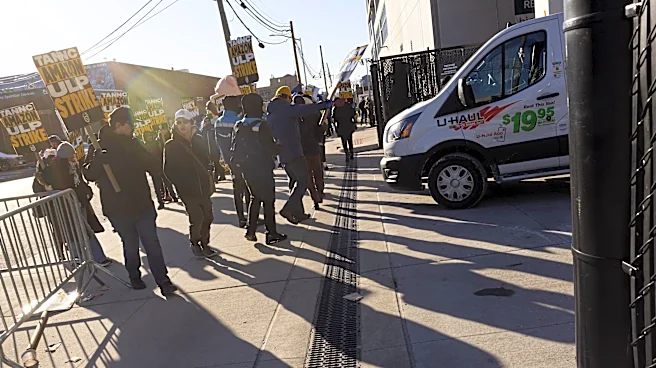
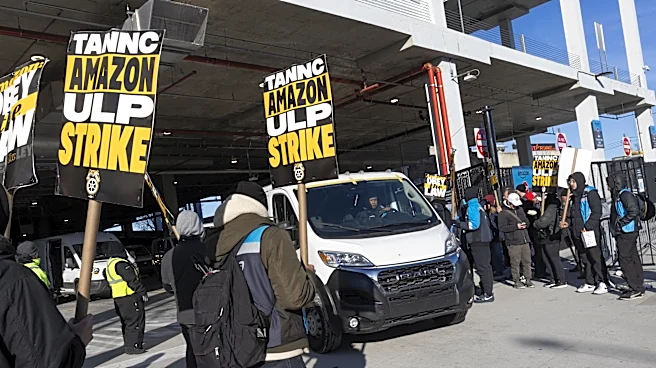
Amazon is currently facing widespread strikes and protests across 20 countries during the Black Friday weekend as part of the "Make Amazon Pay" campaign. This global initiative, jointly launched in 2020 by the UNI Global Union and Progressive International,
demands improved pay, better working conditions, and the right for Amazon employees to unionize. In the U.S., the Teamsters union is organizing rallies and press conferences outside Amazon facilities in cities like Los Angeles and Chicago on Cyber Monday. The protests highlight concerns over working practices, including demands for new heat safety measures and guarantees against certain forms of workplace surveillance. An Amazon spokesperson acknowledged the events but described them as "low key" and stated they were not impacting operations. However, a new "Make Amazon Fair" campaign is also being launched in the U.S., UK, and India, featuring a video detailing Amazon's working practices.
Why It's Important?
These widespread protests against Amazon in the U.S. and globally are significant as they underscore growing labor unrest and demands for corporate accountability within the e-commerce giant. The "Make Amazon Pay" campaign, with its focus on fair wages, improved working conditions, and unionization rights, could set a precedent for labor relations in the rapidly expanding logistics and tech sectors. For U.S. consumers, these actions could potentially lead to disruptions in delivery services, particularly during peak shopping periods like Black Friday and Cyber Monday, though Amazon claims no operational impact. For Amazon, the sustained pressure from unions and advocacy groups could necessitate a reevaluation of its labor practices, potentially leading to increased operational costs if demands for higher wages and better benefits are met. The involvement of major unions like the Teamsters in the U.S. signals a concerted effort to challenge Amazon's anti-union stance, which could have long-term implications for labor organizing across the country.
What's Next?
The "Make Amazon Pay" campaign is expected to continue its activities through Cyber Monday, with the Teamsters union holding rallies in U.S. cities like Los Angeles and Chicago. The ongoing pressure from these global and domestic labor movements will likely keep Amazon's working conditions and labor policies under scrutiny. The company may face continued public relations challenges and potential legal battles if unionization efforts gain further traction. The outcome of these protests could influence future labor negotiations and potentially lead to policy changes regarding worker rights and corporate responsibilities in the U.S. and internationally. The campaign's success in securing concessions from Amazon could also embolden other labor groups to organize similar actions against large corporations.
Beyond the Headlines
The "Make Amazon Pay" campaign highlights deeper ethical and societal implications concerning the balance of power between large corporations and their workforce in the digital age. The demands for fair wages, safe working conditions, and the right to unionize touch upon fundamental labor rights that are increasingly challenged by the gig economy and automated workplaces. The protests also bring to light the global nature of modern supply chains and the interconnectedness of labor issues across different countries. The campaign's focus on Amazon's tax contributions also raises questions about corporate responsibility and equitable wealth distribution. The long-term impact could include a shift in public perception of e-commerce giants, increased consumer demand for ethically sourced and delivered goods, and potentially new legislative frameworks aimed at protecting workers in the evolving landscape of global commerce.