






What's Happening?
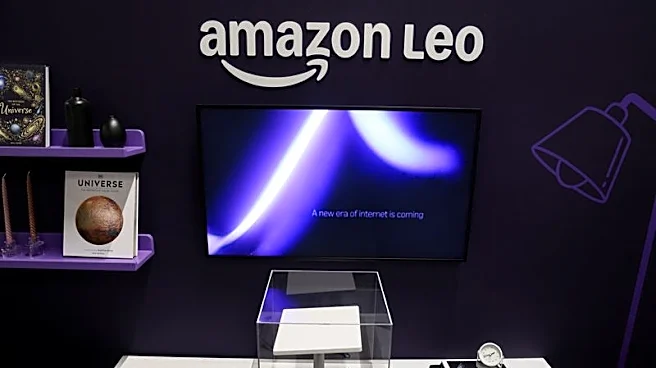
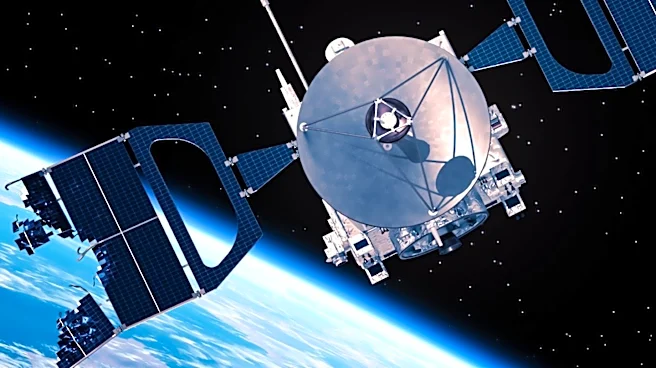
Amazon has submitted an application to the Federal Communications Commission (FCC) to deploy a constellation of 5,105 satellites in low Earth orbit. This initiative aims to provide direct-to-device services using Globalstar spectrum, targeting smartphones
and Internet of Things (IoT) devices. The satellites will operate at altitudes ranging from 510 to 580 kilometers and will utilize spectrum bands at 1.6 and 2.4 gigahertz. Amazon's plan includes using Ka- and V-band spectrum for communication with ground stations. The company has also announced an agreement to acquire Globalstar for approximately $11 billion, expected to close in 2027. This move is part of Amazon's strategy to expand its satellite systems and enhance global mobile network connectivity, especially in areas lacking terrestrial coverage.
Why It's Important?
Amazon's satellite constellation project represents a significant advancement in global connectivity, potentially transforming how mobile and IoT devices access the internet. By providing direct-to-device services, Amazon aims to bridge connectivity gaps in remote and underserved regions, enhancing communication capabilities worldwide. This initiative could disrupt the telecommunications industry by offering an alternative to traditional mobile networks, potentially lowering costs and increasing accessibility. The acquisition of Globalstar further strengthens Amazon's position in the satellite communications market, allowing it to leverage existing infrastructure and spectrum rights. This development underscores the growing competition in the commercial space sector, with major tech companies investing heavily in satellite technology to expand their service offerings.
What's Next?
Pending FCC approval, Amazon will proceed with the deployment of its satellite constellation, with launches expected to begin in the coming years. The company will continue to integrate Globalstar's assets and spectrum into its operations, enhancing its service capabilities. As the project progresses, Amazon may face regulatory scrutiny and competition from other satellite service providers, such as SpaceX's Starlink. The success of this initiative could lead to further investments in satellite technology and collaborations with other tech and telecommunications companies. Additionally, Amazon's efforts may prompt policy discussions on spectrum allocation and the management of satellite traffic in low Earth orbit.