

What's Happening?
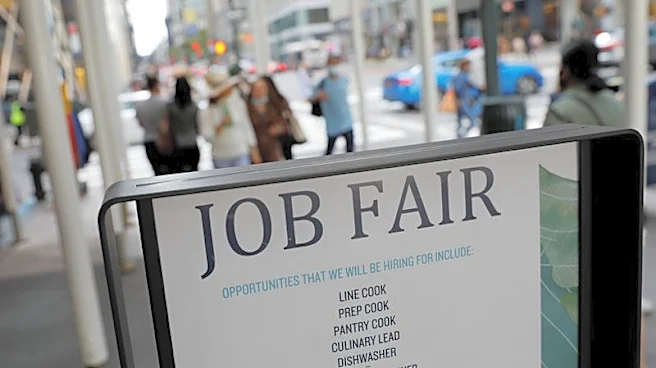
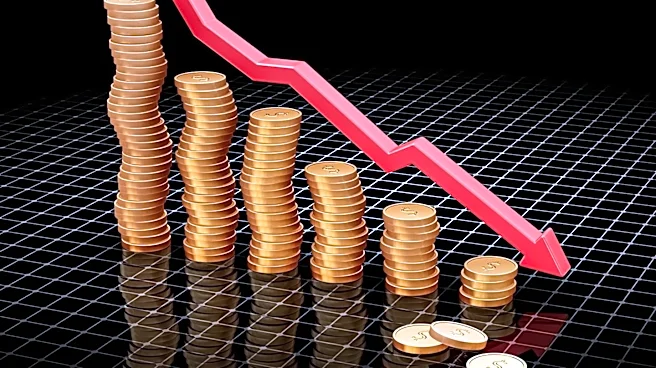
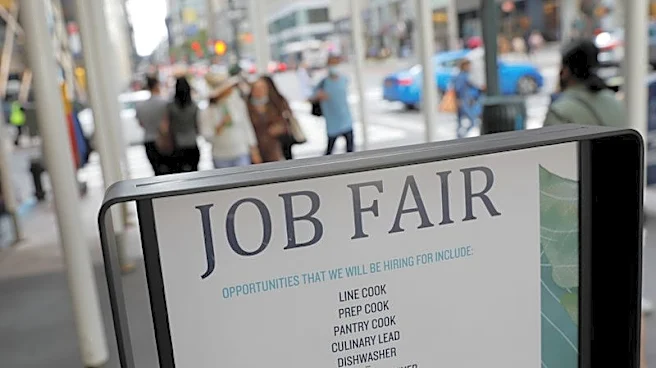
The U.S. economy unexpectedly lost 23,000 jobs in July, according to the latest report from the Bureau of Labor Statistics. Despite this job loss, the national unemployment rate slightly decreased to 4.1%. The decline in employment was most pronounced
in local government education, retail trade, and financial services. In contrast, the healthcare sector continued to add jobs, albeit at a slower pace. The report also included downward revisions for May and June, with a combined reduction of 103,000 jobs. Average hourly earnings rose by 3.2% year-over-year, which is below expectations and the slowest pace in five years.
Why It's Important?
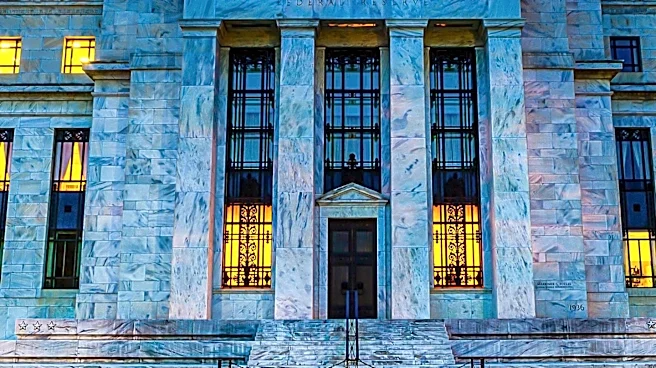
The unexpected job losses in July have significant implications for the Federal Reserve's monetary policy. The decline in employment reduces the likelihood of an interest rate hike in the near term, as the Fed typically raises rates to curb inflation and lowers them to stimulate hiring. The weak job market data complicates the Fed's decision-making process, as it balances the need to control inflation with the goal of promoting maximum employment. The labor market's performance is a critical factor in the Fed's policy considerations, and the latest data suggests a potential slowdown in economic activity.
What's Next?
The Federal Reserve's upcoming policy decisions will be closely watched, with the next meeting of the Federal Open Market Committee (FOMC) scheduled for September. The recent jobs report has shifted market expectations, with a higher probability that the Fed will hold interest rates steady rather than implement a rate hike. Additionally, upcoming economic indicators, such as the Consumer Price Index (CPI) inflation data, will provide further context for the Fed's policy direction. The housing market, which has shown signs of a summer slowdown, may also be affected by these developments.