






What's Happening?
The city of Laredo Bridge System has initiated a new policy imposing administrative penalties of up to $2,000 on commercial carriers with insufficient funds in their Automated Vehicle Identification (AVI), or TradeTag, accounts when crossing the U.S.-Mexico
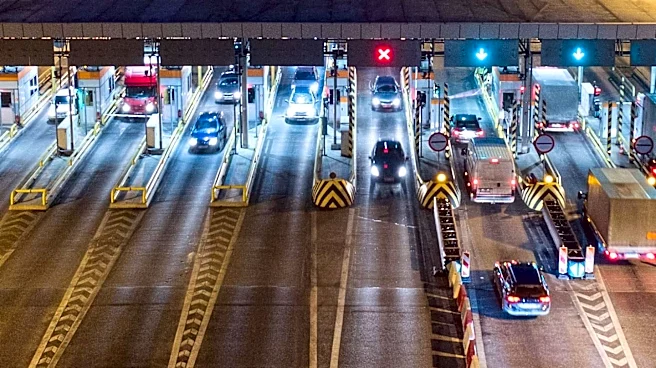
border via the World Trade Bridge and Colombia-Solidarity Bridge. This updated policy, enforced since Monday, allows trucks with low balances to proceed across the bridge but assesses fines to the carrier's account. This replaces the previous system, which required trucks with insufficient funds to perform a U-turn, causing approximately five to seven minutes of disruption per incident. According to Felipe G. Romero, marketing director for Port Laredo, the change aims to enhance traffic flow and operational efficiency at Laredo's commercial international bridges. Laredo is the busiest inland trade gateway on the U.S.-Mexico border, handling over $354 billion in imports and exports in 2025 and processing $199.2 billion year-to-date through June. The city processes more than 17,000 commercial truck crossings daily across its two international bridges. Bridge system data indicates an average of 120 to 150 insufficient-fund U-turns per month.
Why It's Important?
This new enforcement policy is critical for maintaining the efficiency of North American supply chains, as even minor disruptions at Laredo's commercial bridges can have widespread ripple effects. Laredo's status as the nation's top trade gateway underscores the importance of smooth operations for the flow of goods between the U.S. and Mexico. By eliminating the need for U-turns, the city aims to reduce traffic congestion and improve the consistency and reliability of bridge operations, which is vital for businesses relying on timely cross-border freight movement. The escalating penalty structure—$500 for a first violation, $1,000 for a second, and $2,000 plus account suspension for a third—is designed to incentivize carriers to proactively manage their TradeTag account balances. This measure directly impacts logistics companies and commercial carriers, who must now ensure valid credit cards are on file and enroll in automatic account replenishment to avoid significant fines and potential service interruptions. The policy's success will be measured by its ability to reduce delays and enhance the overall fluidity of trade at this crucial border crossing.
What's Next?
Commercial carriers operating through Laredo's World Trade Bridge and Colombia-Solidarity Bridge will need to adapt to the new TradeTag policy by ensuring their accounts are adequately funded and by enrolling in automatic replenishment. The city of Laredo Bridge System will likely monitor the effectiveness of the new policy in reducing traffic disruptions and insufficient-fund incidents. Carriers who fail to comply will face escalating administrative penalties, potentially leading to account suspension and additional reactivation fees. The city's outreach efforts to encourage customers to monitor account balances and maintain valid payment methods will continue. The long-term goal is to establish a more streamlined and predictable cross-border trade environment, which could lead to faster transit times and reduced operational costs for businesses engaged in U.S.-Mexico trade. The policy's impact on the number of insufficient-fund incidents and overall bridge efficiency will be a key indicator of its success.
Beyond the Headlines
The implementation of stricter toll enforcement in Laredo reflects a broader effort to optimize critical infrastructure points within global supply chains. While seemingly a minor administrative change, the policy addresses a systemic issue of efficiency at high-volume trade gateways. The previous U-turn requirement, though intended to manage unpaid tolls, inadvertently created bottlenecks that impacted the flow of billions of dollars in trade. This move highlights the economic imperative of minimizing even small delays in modern logistics. Furthermore, it underscores the increasing reliance on automated systems and digital payment solutions in cross-border commerce. The policy also touches upon the responsibility of commercial entities to maintain operational readiness, with financial penalties serving as a strong deterrent against non-compliance. This could set a precedent for other busy border crossings to adopt similar measures, further integrating technology and stricter enforcement to enhance trade efficiency and reduce friction in international supply chains.