

What's Happening?
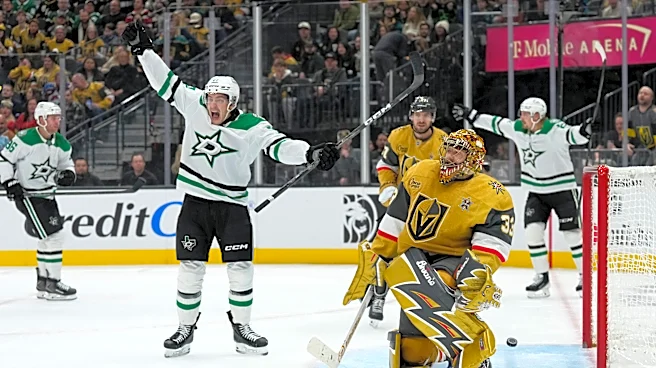
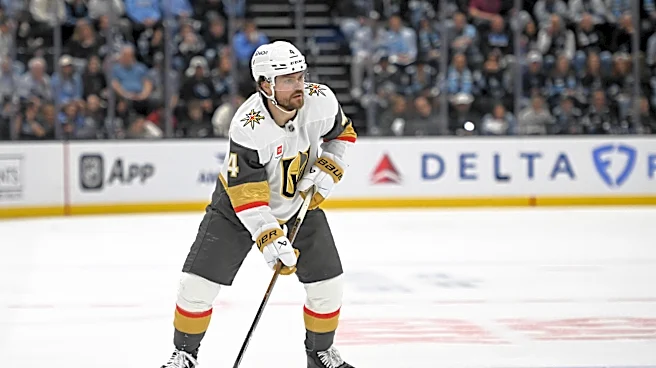
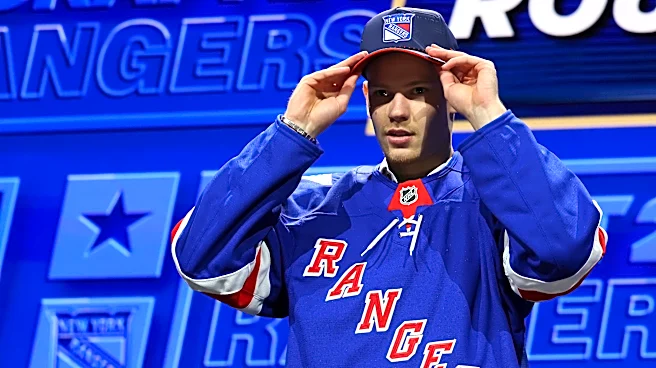
The New York Rangers are experiencing mixed results from their offseason acquisitions, with winger Pavel Dorofeyev and defenseman Marcus Pettersson underperforming expectations in the first quarter of the season. Dorofeyev, acquired from the Vegas Golden
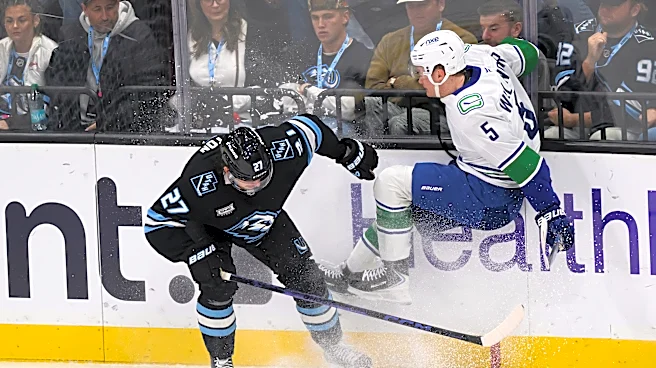
Knights, was expected to be a top-six forward capable of improving the team's offense, having scored at least 35 points in previous seasons. However, he has only six goals, putting him on a 24-goal pace, significantly below expectations after signing a seven-year, $11 million annual extension. His plus/minus ratio stands at -18. Pettersson, acquired from the Vancouver Canucks for a 2030 first-round pick, was intended to anchor the second defensive pairing. Despite his familiarity with head coach Mike Sullivan's system, his offensive metrics are low, landing in the 11th percentile with a -1.9, and his overall net rating is in the 25th percentile.
Why It's Important?
The underperformance of key acquisitions like Pavel Dorofeyev and Marcus Pettersson poses a significant challenge for the New York Rangers as they aim to maintain their playoff position. Dorofeyev's struggle to produce offensively, despite leading the team in shot attempts, indicates a potential disconnect between opportunity and execution, which directly impacts the team's scoring depth. Pettersson's defensive shortcomings, particularly his low offensive metrics, undermine the stability of the second defensive pairing, a crucial component for a successful NHL team. The substantial investment in these players, both in terms of salary and draft capital, means their continued struggles could hinder the team's overall competitiveness and long-term roster planning. For the Rangers to remain contenders, these players must elevate their performance to justify their roles and contributions.
What's Next?
To remain competitive in the Metropolitan Division and Eastern Conference playoff race, the New York Rangers need significant improvement from Pavel Dorofeyev and Marcus Pettersson. Dorofeyev's low shooting rate suggests that positive regression could occur, but his current performance is not helping the team win. Pettersson's defensive metrics are solid, but his offensive output needs to increase to meet the demands of a second-pairing defenseman. The coaching staff will likely continue to work with these players to help them integrate more effectively into the team's system and find their scoring touch or defensive consistency. The team's ability to address these individual performance issues will be critical in determining their success in the remainder of the season and their playoff aspirations.
Beyond the Headlines
The struggles of high-profile acquisitions like Dorofeyev and Pettersson highlight the inherent risks in professional sports trades and contracts. Even players with proven track records can face difficulties adapting to new teams, systems, or expectations, leading to significant financial and strategic implications for the franchise. Dorofeyev's large contract and Pettersson's acquisition cost (a first-round pick) underscore the pressure on management to make impactful decisions. This situation also brings into focus the psychological aspect of player performance, where a change of scenery or increased pressure can either elevate or hinder an athlete's game. The Rangers' ability to navigate these challenges will not only affect their current season but also set precedents for future player evaluations and team building strategies, emphasizing the importance of fit and adaptability beyond raw talent.