








What's Happening?
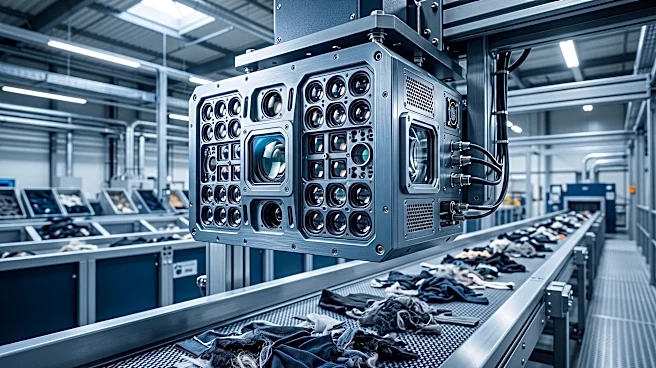
AVICON R&D, a Polish machine vision company, has developed an automated solution for VIVE Textile Recycling, a leading European textile recycling company. This system integrates artificial intelligence with hyperspectral imaging to significantly improve
the identification and pairing of shoes in textile recycling facilities. Textile recycling centers frequently receive large volumes of used footwear as individual items, not pairs, mixed with other garments. The challenge lies in identifying matching pairs, especially when visually similar shoes are made from different materials. The new system addresses this by combining material data from hyperspectral imaging with conventional RGB and 3D information, feeding it into an AI pairing algorithm. This allows for more accurate material identification, even when visual appearances vary, and enables the system to process up to 9,000 shoes per hour across two parallel sorting lines, enhancing sorting efficiency and resale value.
Why It's Important?
This technological advancement is crucial for the textile recycling industry, particularly in the U.S. and globally, as it directly impacts the efficiency and economic viability of footwear recycling. By accurately identifying shoe materials and pairing them, the system reduces waste, increases the value of recovered materials, and supports the circular economy. The ability to distinguish between visually similar shoes made from different materials, such as rubber, plastic, leather, and textiles, ensures that higher-value materials can be prioritized for pairing. This not only optimizes the recycling process but also opens avenues for new business models in the secondhand clothing market by providing detailed product information. For U.S. businesses involved in textile recycling, this technology could lead to significant operational cost savings and increased revenue from higher-quality recycled products.
What's Next?
The implementation of this hyperspectral imaging and AI-driven system is expected to lead to broader adoption within the textile recycling industry. As the demand for sustainable practices and circular economy models grows, more recycling facilities are likely to invest in similar automated sorting technologies. AVICON anticipates increasing opportunities for hyperspectral imaging in circular textile processes, suggesting that this technology could become a standard for efficient material recovery. Further research and development may focus on refining the accuracy of material classification and expanding the range of materials that can be identified. This could also lead to the development of new applications for hyperspectral imaging in other areas of waste management and material recovery, potentially influencing U.S. environmental policies and industry standards.
Beyond the Headlines
The deeper implications of this technology extend to the broader environmental and economic landscape. By improving the efficiency of shoe recycling, it contributes to reducing landfill waste and conserving natural resources, aligning with global sustainability goals. Ethically, it promotes responsible consumption and production by making it easier to reuse and recycle footwear, thereby lessening the environmental footprint of the fashion industry. Economically, it could stimulate innovation in material science and manufacturing, encouraging the development of more recyclable shoe components. The integration of AI and advanced imaging techniques also highlights a growing trend towards smart, data-driven solutions in industrial processes, setting a precedent for how technology can address complex environmental challenges and foster a more sustainable future.