





What's Happening?
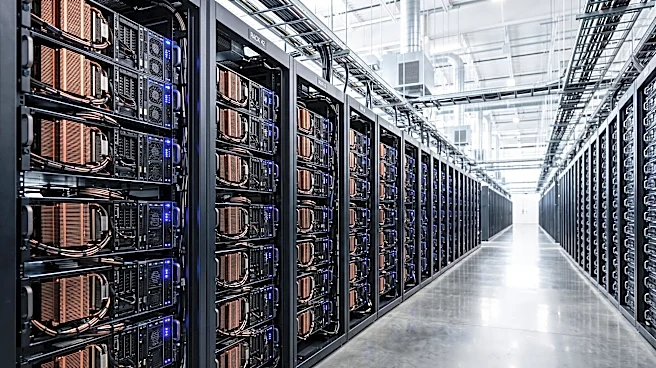
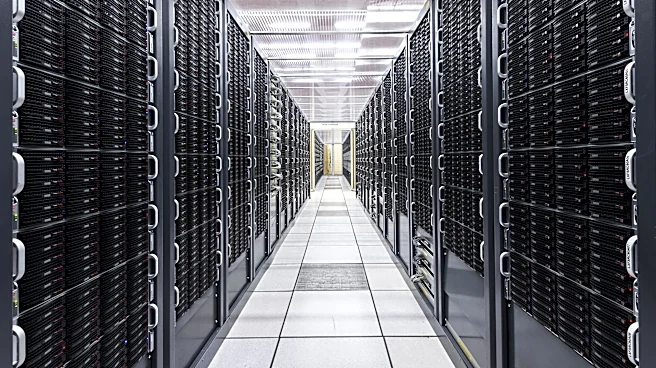
CoreWeave, a cloud computing company specializing in AI infrastructure, is rapidly expanding its network of 52 data centers globally, from Texas to Scotland. This expansion is largely financed through substantial debt, with the company owing $47 billion,
including $10 billion due next year. CoreWeave reported a $709 million loss last quarter on revenues of $3.6 billion. The company's business model involves selling AI compute power, primarily using Nvidia chips, to major AI firms like OpenAI and Anthropic. CoreWeave has pioneered GPU-backed debt, borrowing against its Nvidia chips and customer contracts, which has allowed it to secure nearly $25 billion. Despite some loans achieving 'investment grade' status, concerns persist regarding the depreciation rate of GPUs and the company's overall financial stability, especially given its reliance on upfront customer payments for future services.
Why It's Important?
CoreWeave's aggressive, debt-laden expansion highlights the capital-intensive nature of building AI infrastructure and the speculative elements within the AI boom. Its financial model, heavily reliant on GPU-backed debt and unsecured senior notes, presents a test case for new forms of financing in the tech sector. The company's vulnerabilities, including its significant debt load and reliance on customer solvency and Nvidia's continued support, reflect broader risks within the AI economy. A potential default by CoreWeave could have ripple effects on its creditors, including institutional investors like insurance companies and pension funds, and could impact the stability of the AI supply chain. This situation underscores the precarious balance between rapid innovation and financial prudence in emerging technology markets, with implications for investor confidence and the broader financial system.
What's Next?
CoreWeave is expected to continue raising additional debt to finance its ongoing data center construction and meet its contractual commitments. Analysts will closely monitor the company's ability to generate sufficient cash flow from new customers, as a significant portion of its current revenue comes from upfront payments for future services. The solvency of its major AI clients, such as OpenAI and Anthropic, and Nvidia's continued role as a financier for the AI ecosystem will be critical factors influencing CoreWeave's future. Political headwinds or local restrictions that delay data center projects could further strain CoreWeave's finances, as interest payments accrue regardless of operational status. The market will be watching for any signs of distress or default, which could trigger broader concerns about the stability of the AI infrastructure sector.
Beyond the Headlines
CoreWeave's situation brings to light the intricate and potentially fragile financial scaffolding supporting the AI revolution. The creation of GPU-backed debt as a new asset class raises questions about its long-term viability and risk assessment, particularly given the rapid obsolescence of technology. This model essentially transfers significant financial risk from AI developers and chip manufacturers to intermediary cloud providers and their creditors. The circular nature of investments, where Nvidia finances both CoreWeave and its clients, creates a complex web of dependencies that could amplify systemic risks if any part of the chain falters. This scenario prompts a deeper examination of financial innovation in high-growth tech sectors, the potential for asset bubbles, and the need for robust regulatory frameworks to manage novel financial instruments and interconnected corporate structures in the evolving AI economy.