





What's Happening?
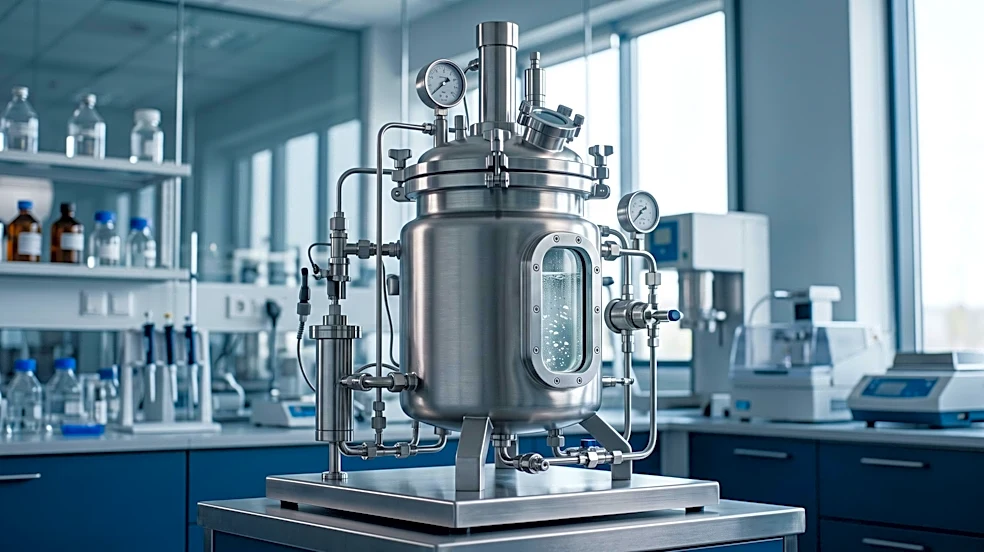
Liberation Bioindustries has not received any acceptable offers following a strategic review aimed at exploring a sale or joint venture for its contract biomanufacturing facility in Indiana. The construction of the 600,000-liter facility in Richmond,
Indiana, which was initially slated to be operational by the end of 2024, is currently paused. The company requires an additional $25 million to complete the project, on top of the $125 million already invested through equity, debt, and other support. According to key shareholder Agronomics, certain expected funding did not materialize, and increased costs due to global economic conditions and project delays have created this funding gap. Despite talks with two undisclosed lead parties during a four-month review, no suitable external partner was found, meaning Liberation Bioindustries must now complete the facility independently.
Why It's Important?
This funding shortfall and lack of acceptable offers for Liberation Bioindustries highlight significant challenges within the U.S. biomanufacturing and alternative protein sectors. The Richmond facility was designed to address a critical bottleneck: the lack of commercial-scale, food-grade precision fermentation capacity. Its struggle to secure the final $25 million, despite substantial prior investment, raises questions about investor confidence in the scalability and immediate commercial viability of such projects. This situation could deter future investments in similar infrastructure, impacting the growth trajectory of alternative protein startups that rely on contract manufacturing. The inability to complete this facility could prolong the reliance on less suitable biopharma capacity or push companies to seek manufacturing solutions outside the U.S., affecting domestic innovation and job creation in the sector.
What's Next?
Liberation Bioindustries, with the support of Agronomics and other institutional shareholders, is now working to secure the necessary $25 million to complete the facility. This funding is expected to come from a combination of additional equity from shareholders, further secured debt, public authority grants and loans, and customer pre-payments. If the funds are secured, Agronomics anticipates the Richmond site could become operational within six months from that date, as most major construction elements are already complete, with remaining work primarily involving piping, welding, and electrical installations. The company and Agronomics are aiming to finalize a full funding package in the first half of 2027. The success of this fundraising effort will be crucial for the facility's future and its potential to serve the precision fermentation industry.
Beyond the Headlines
The difficulties faced by Liberation Bioindustries underscore a broader 'chicken and egg' dilemma in the biomanufacturing sector: customers demand certainty on operational timelines before committing to contracts, while capital providers require firm commitments before releasing funds. This situation is exacerbated by a challenging financing environment, with high interest rates and investor attention shifting towards other sectors like AI. The incident also brings to light the complexities of scaling up novel food ingredients, including the need for regulatory approvals like GRAS notices and the challenges of securing multi-year contracts. The outcome for Liberation Bioindustries could serve as a cautionary tale or a learning opportunity for the industry, emphasizing the need for more robust financial models and clearer pathways to commercialization for large-scale biomanufacturing projects in the U.S.