
What's Happening?
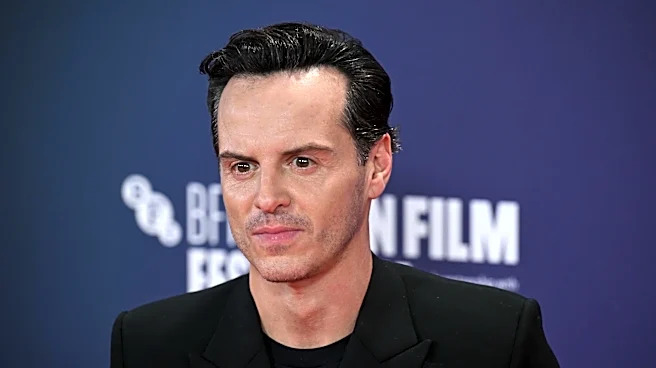
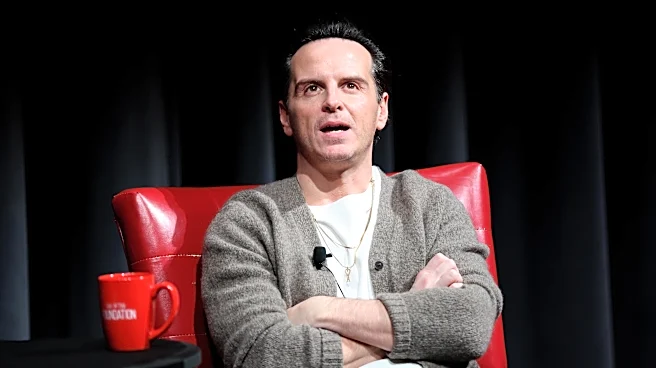
Andrew Scott, known for his compelling portrayal of Moriarty opposite Benedict Cumberbatch in the BBC series 'Sherlock,' is more frequently recognized by the public for his role as the 'Hot Priest' in 'Fleabag.' Despite the critical acclaim for his 'Sherlock'
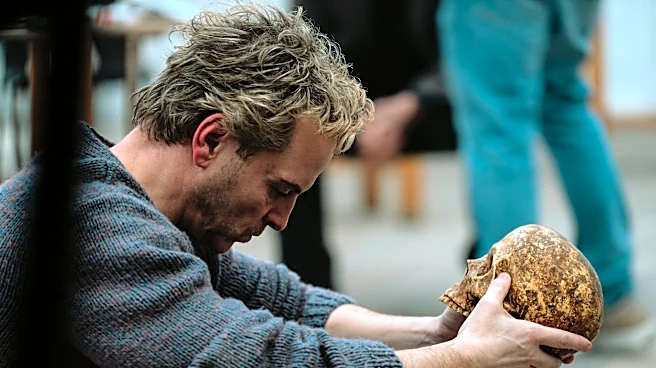
performance, Scott confirmed in a recent interview with CinemaBlend that 'Fleabag' is the role for which he is most often approached. He also mentioned some recognition for his work in 'Ripley' and his theater performances through NT Live, particularly 'Vanya.' This revelation came during an interview discussing his upcoming film 'Elsinore,' where he portrays Ian Charleson.
Why It's Important?
This shift in public recognition highlights the significant cultural impact of 'Fleabag' and Scott's 'Hot Priest' character, demonstrating how certain roles can transcend an actor's broader body of work. For actors, this can influence future casting opportunities and public perception, potentially steering them towards roles that align with their most popular portrayals. It also underscores the power of streaming platforms and specific character archetypes in shaping audience engagement and memory. The 'Hot Priest' role, with its layered and charismatic depiction, has evidently resonated deeply with audiences, overshadowing even a critically acclaimed performance in a globally popular series like 'Sherlock.'
What's Next?
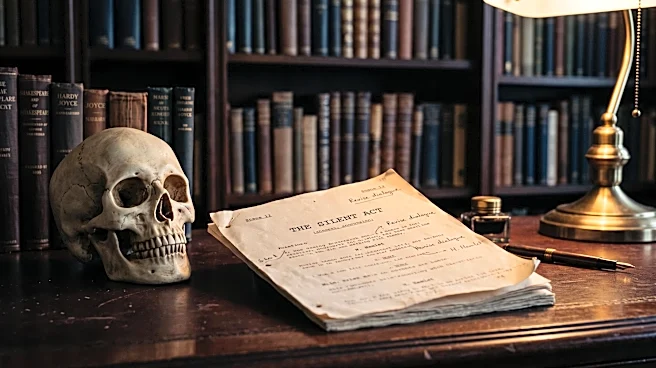
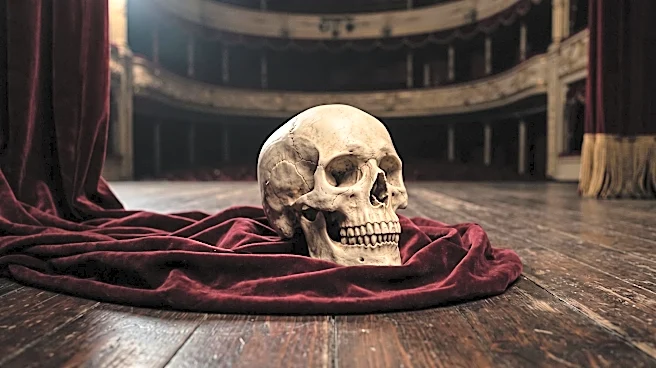
With Andrew Scott's new film 'Elsinore' set to release on December 4, there is potential for audiences to associate him with a new character, Ian Charleson, and possibly Hamlet, Prince of Denmark. This could diversify the roles for which he is recognized, moving beyond the 'Hot Priest' and Moriarty. As Scott continues to take on varied projects, including a guest role as a therapist in 'It Gets Worse,' the public's perception of his most iconic character may evolve. The upcoming film's reception will be a key factor in determining if 'Elsinore' adds another significant role to his public identity.
Beyond the Headlines
The phenomenon of an actor being predominantly identified with a single role, even when they have a diverse and acclaimed career, speaks to the powerful connection audiences form with certain characters. The 'Hot Priest' character, in particular, tapped into a cultural zeitgeist, becoming a meme and a subject of widespread discussion. This illustrates how a character can achieve a life beyond the screen, influencing popular culture and an actor's public persona. It also raises questions about the balance between an actor's artistic range and the indelible mark left by a particularly resonant performance, especially in the age of social media and viral content.