





What's Happening?
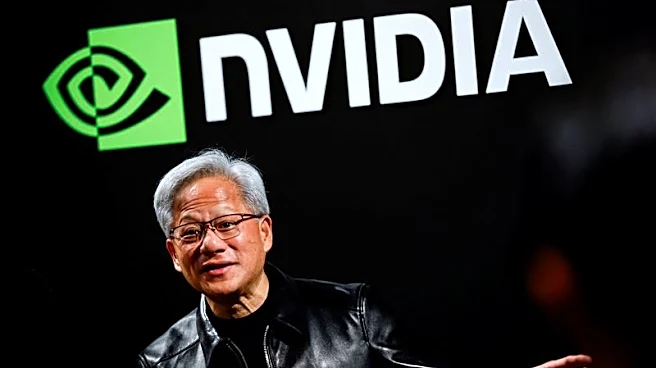
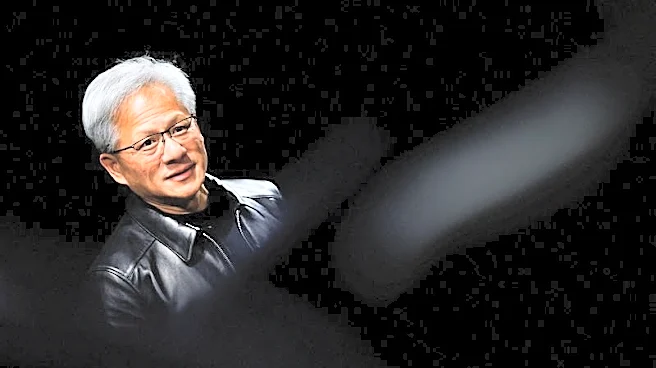
Jensen Huang has resigned as CEO, president, and board member of Nvidia, effective immediately, following an independent board investigation into his personal conduct. CFO Colette Kress has been appointed interim CEO, and Harvey Jones, the board's first-ever
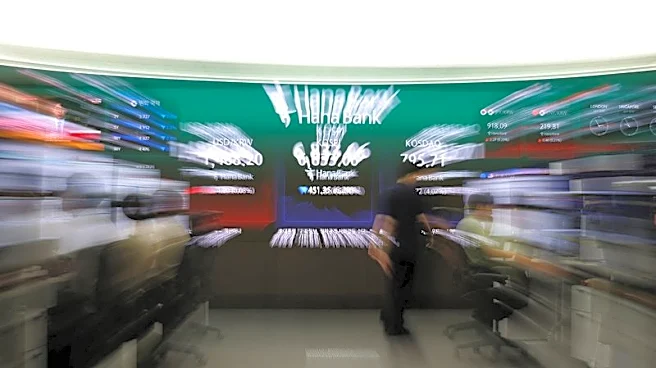
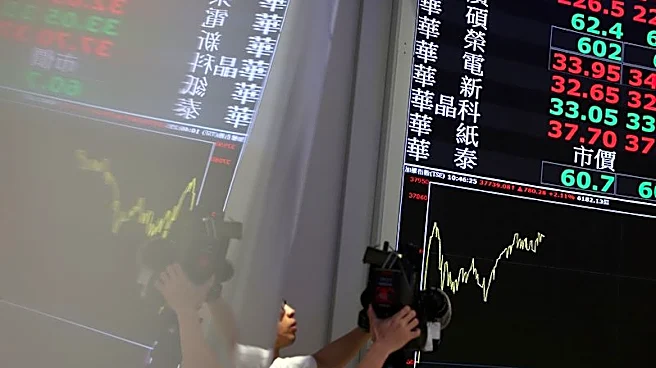
chair, is leading the search for a successor. This unexpected leadership change has significantly impacted Nvidia's stock, which fell 12.8% for the week to $162.85, now sitting 32% below its October 6 record of $239.24. The market's reaction is primarily attributed to the uncertainty surrounding the company's future leadership, rather than a repricing of its core products. The news arrived on Thursday, causing shares to open down 13% and close down 4.3%. The company reportedly had no succession plan or COO in place prior to Huang's departure.
Why It's Important?
The resignation of Jensen Huang, a highly influential figure in the technology industry, from Nvidia carries substantial implications for the company, the semiconductor sector, and the broader U.S. stock market. Nvidia is considered a pivotal company, especially in the context of artificial intelligence and high-performance computing, making its stability crucial. The lack of a clear succession plan exacerbates investor concerns, as leadership transitions can introduce strategic shifts and operational disruptions. This uncertainty could deter potential investors and impact Nvidia's ability to maintain its market leadership in a highly competitive industry. For the broader market, particularly the S&P 500 where Nvidia holds significant weight, this event could contribute to volatility. The 'AI trade,' which has seen substantial investment, is also being re-evaluated, with funding cracks widening as evidenced by SoftBank's significant quarterly loss and OpenAI delaying its equity offering. This situation highlights how leadership stability and clear succession planning are critical for maintaining investor confidence and market valuation, especially for companies at the forefront of technological innovation.
What's Next?
Nvidia's immediate future will be dominated by its fiscal third-quarter earnings report, scheduled for Tuesday after the market close. Investors will be keenly focused not only on the numbers, which are expected to be around $2.49 per share on revenue near $109 billion, but also on the company's guidance, details on customer financing for its backlog, and any statements from interim CEO Colette Kress regarding the CEO search. The market will also be watching for any updates on the requested House appearance by Jensen Huang for November 18, which is now uncertain. The search for a permanent CEO will be a critical factor in restoring investor confidence and providing strategic direction. The performance of Nvidia's stock in the coming weeks will likely depend on the clarity and credibility of the company's plans for leadership and future growth. A strong earnings report coupled with a clear succession strategy could help stabilize the stock, while further uncertainty could lead to continued downward pressure. The broader market will also be influenced by how the 'AI trade' continues to sort out winners from those with significant debt, as seen with CoreWeave's situation.
Beyond the Headlines
Jensen Huang's resignation from Nvidia, a company he co-founded and led for decades, extends beyond immediate financial implications to touch upon corporate governance and the cult of personality often associated with visionary tech leaders. The absence of a succession plan for such a critical role highlights a potential vulnerability in corporate structures, even for highly successful companies. This event could prompt other tech firms to review and strengthen their own leadership transition strategies. Furthermore, the scandal leading to his resignation, though unspecified in detail, underscores the increasing scrutiny on the personal conduct of top executives and its potential impact on corporate reputation and shareholder value. In the fast-paced and high-stakes world of technology, where innovation is paramount, the stability of leadership is often intertwined with the perception of a company's future trajectory. This incident serves as a stark reminder that even the most dominant companies are susceptible to internal challenges that can ripple through the entire market, affecting investor sentiment and the broader economic landscape.