




What's Happening?
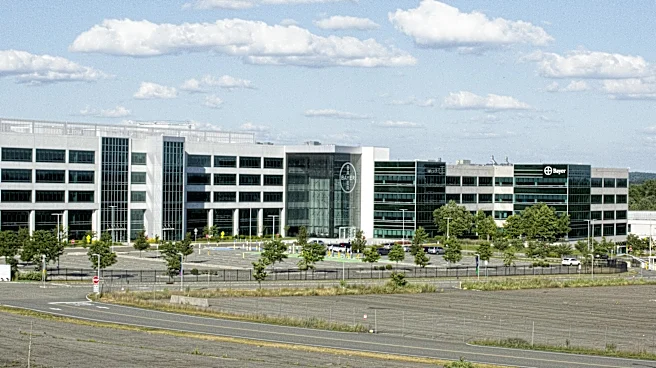
Bayer, the German pharmaceutical and agricultural giant, has entered into a licensing agreement with China's Hansoh Pharmaceutical. This deal grants Bayer exclusive rights to develop, manufacture, and commercialize the experimental cancer drug HS-20122
in markets outside mainland China, Hong Kong, Macau, and Taiwan. The agreement is valued at up to $3.25 billion, comprising an upfront payment of $150 million and up to $3.1 billion in milestone payments tied to development, regulatory approval, and commercialization, along with tiered royalties on future net sales. HS-20122 is an innovative bispecific antibody-drug conjugate (ADC) designed to target solid tumors driven by EGFR and c-Met expression or treatment resistance, with non-small cell lung cancer as a primary indication. Hansoh Pharmaceutical recently presented Phase 1 clinical data for HS-20122 at the 2026 European Society for Medical Oncology annual meeting, showing encouraging efficacy and safety in non-small cell lung cancer patients. The transaction is currently subject to antitrust review.
Why It's Important?
This agreement is significant for Bayer as it aligns with its strategy to rebuild its drug development pipeline through external partnerships. The company is facing pressure from patent expirations on key drugs like the anticoagulant Xarelto and the eye drug Eylea, which are experiencing erosion from generics. Bayer is relying on new products such as Kerendia, Nubeqa, and Sunharbo for growth, and early-stage assets like HS-20122 are crucial to fill potential revenue gaps caused by upcoming patent cliffs. For Hansoh Pharmaceutical, the deal is expected to amplify the scientific and commercial value of its technology platform, with the upfront payment supporting investment in its ADC platform R&D. The success of the $3.1 billion in milestone payments, however, hinges on future clinical trial results and drug approval outcomes. The deal also highlights a broader industry trend of multinational pharmaceutical companies acquiring ADC assets from Chinese biotech firms, which is gradually enhancing the bargaining position of Asian innovative drugmakers in licensing negotiations.
What's Next?
The immediate next step for this agreement is the completion of antitrust review. Following approval, Bayer will proceed with the clinical development of HS-20122 in its licensed territories. The drug's progression through subsequent clinical trial phases and its eventual pursuit of regulatory approvals in various countries will be critical in determining the realization of the substantial milestone payments. Bayer will need to integrate HS-20122 into its existing pharmaceutical pipeline and allocate resources for its global development and commercialization. For Hansoh, the focus will remain on the continued advancement of its ADC platform and potentially other early-stage assets, leveraging the capital infusion from the upfront payment. The market will closely watch the clinical trial outcomes of HS-20122 to assess its potential to address unmet medical needs and contribute to Bayer's future revenue growth.
Beyond the Headlines
This licensing deal underscores the increasing globalization of pharmaceutical innovation and the strategic importance of external collaborations for major drug companies. As patent cliffs continue to challenge established pharmaceutical giants, partnerships with biotech firms, particularly those in emerging markets like China, become vital for replenishing pipelines and accessing novel therapeutic modalities. The focus on antibody-drug conjugates (ADCs) reflects a broader industry shift towards precision oncology, where treatments are designed to target cancer cells more specifically, potentially reducing side effects and improving efficacy. The cautious investor reaction, as evidenced by Bayer's stock dip on the announcement day, suggests that while external licensing is a necessary strategy, investors remain keen on seeing tangible progress and successful clinical outcomes from early-stage assets. This deal also highlights the growing influence of Chinese biotech companies as significant players in the global drug discovery and development landscape.