


What's Happening?
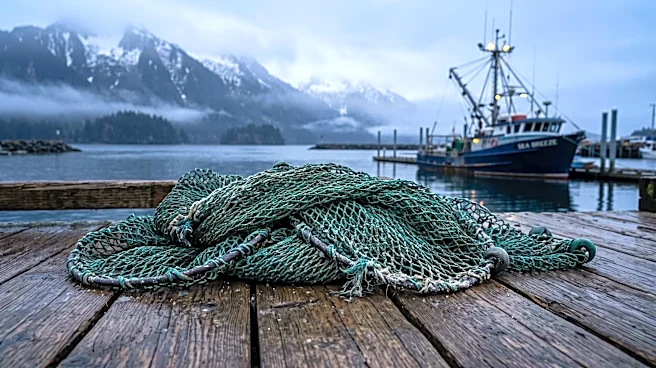
Alaska's commercial fishing industry saw a job rebound in 2025, marking the first increase in six years. However, Juneau has not mirrored this recovery, experiencing a substantial decline in its active commercial harvesters. According to new figures from
the Alaska Department of Labor and Workforce Development, Juneau had 175 residents holding commercial fishing permits and landing a catch last year, a significant drop from 295 in 2000. This represents a nearly 41% decrease over 25 years, with 120 fewer harvesters. This trend contrasts sharply with the nearly doubled seafood-processing employment in the capital during the same period. Statewide, the seafood harvesting industry gained an average of 216 jobs per month in 2025, a 4% increase from the previous year, largely driven by stronger salmon fisheries. Despite this, the statewide recovery only replaced a small fraction of the 2,300 jobs lost in the preceding downturn. Southeast Alaska, including Juneau, saw a more modest increase of fewer than 15 jobs in commercial harvesting in 2025, a gain of less than 1%.
Why It's Important?
The decline in Juneau's commercial fishing harvester population signifies a significant shift in the local economy and raises concerns about the future of its traditional maritime sector. While the state as a whole is seeing a modest recovery in fishing jobs, Juneau's continued loss of harvesters indicates a deeper, localized issue that could impact the community's cultural identity and economic diversity. The contrasting growth in seafood processing jobs suggests a transformation where Juneau is becoming more of a processing hub rather than a harvesting base. This shift could lead to a reliance on seasonal, non-resident labor for processing, as highlighted by the fact that approximately 69% of Juneau's seafood-processing workers in 2024 were non-residents. This dynamic could affect local employment opportunities for residents seeking harvesting careers and alter the economic benefits derived from the fishing industry within the community. The long-term implications include potential erosion of local fishing knowledge and infrastructure, as fewer residents participate directly in harvesting.
What's Next?
The Juneau Economic Development Council has documented this longer decline, noting a 49% decrease in permitted commercial fishing vessels registered in Juneau, Auke Bay, and Douglas between 2005 and 2023. This trend suggests that without intervention or significant changes in market conditions, the number of local harvesters may continue to dwindle. Future discussions will likely focus on what measures could be taken to attract and retain local fishermen, such as economic incentives, training programs, or policy changes aimed at supporting small-scale commercial fishing operations. The continued growth of the seafood processing sector, while providing jobs, will also necessitate ongoing evaluation of its impact on the local workforce and infrastructure. The community may need to address the reliance on non-resident workers in processing and explore ways to integrate more local residents into these roles, or to diversify its economy further to offset the decline in direct harvesting participation.
Beyond the Headlines
The persistent decline in Juneau's commercial fishing harvesters, despite a statewide rebound, points to deeper structural changes within the region's economy and potentially the broader fishing industry. This trend could reflect challenges such as increasing operational costs, declining profitability for independent operators, or an aging demographic of fishermen without sufficient new entrants. The shift towards a processing-centric model, while economically beneficial in terms of job creation, raises questions about the sustainability of local food systems and the preservation of traditional livelihoods. The reliance on non-resident labor in processing also highlights socio-economic implications, including potential impacts on housing, social services, and the overall community fabric. This situation underscores a broader national challenge in many coastal communities where traditional industries are undergoing significant transformation, prompting a re-evaluation of economic development strategies and community resilience in the face of evolving industrial landscapes.