

What's Happening?
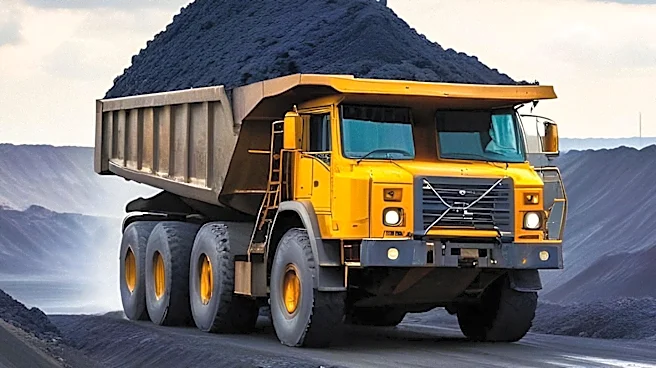
China has officially rolled out its largest pure electric mining truck, the ZL230E, developed by Zijin Longking. This 350-ton gross weight electric haul truck is designed for continuous open-pit mining operations, featuring a 230-ton payload capacity
and a 125-cubic-meter cargo box. The ZL230E is equipped with a colossal 1,400 kWh battery pack that can rapidly charge to 90 percent in just 25 minutes. The vehicle integrates heavy electric hardware with autonomous intelligence through a partnership with Australian autonomous mining developer EACON. This development is part of China's broader 'dual-carbon' strategy, aiming to transition from diesel to electric mining fleets. Zijin Mining, for instance, plans to expand its electric mining truck fleet from 13 units in 2020 to 1,719 by 2025, with a full transition targeted within three years. The ZL230E's rollout was highlighted during an investment promotion event in Xinluo District, emphasizing 'Mining + Intelligent Manufacturing'.
Why It's Important?
The introduction of the ZL230E signifies a major step in reducing the carbon footprint of the mining industry, which is one of the most carbon-intensive sectors due to its reliance on diesel-powered heavy-tonnage haul trucks. This shift towards electric and autonomous mining vehicles can lead to significant environmental benefits, including zero emissions and reduced noise pollution. Economically, the ZL230E promises to boost transport efficiency, slash operating costs through lower energy consumption and maintenance, and enhance reliability. For the U.S. and global mining industries, this innovation could set a new standard for sustainable practices and operational efficiency, potentially influencing future equipment development and adoption. Companies that embrace similar technologies could gain a competitive edge in an increasingly environmentally conscious market, while those that lag might face regulatory pressures or higher operational costs.
What's Next?
Zijin Mining plans to fully transition its mining fleet from diesel to electric within three years, supported by Zijin Longking's continued development and deployment of electric mining trucks. The company also intends to pair its electric fleet with wind, solar, and energy storage infrastructure to create fully integrated, low-cost green energy solutions for mining operations. This comprehensive approach suggests a future where mining operations are not only electrified but also powered by renewable energy sources. The success and efficiency of the ZL230E and similar electric vehicles could accelerate the adoption of such technologies globally, prompting other major mining companies and equipment manufacturers to invest further in electric and autonomous solutions. This could lead to increased competition and innovation in the green mining technology sector.
Beyond the Headlines
The ZL230E's integration of autonomous intelligence with heavy electric hardware points towards a future where mining operations are not only cleaner but also more automated. This convergence of technologies could lead to safer working conditions by reducing human exposure to hazardous environments and repetitive tasks. Furthermore, the rapid charging capabilities of the ZL230E's battery pack highlight advancements in battery technology that could have broader applications beyond mining, potentially impacting other heavy-duty industrial sectors. The 'dual-carbon' strategy driving this innovation in China reflects a growing global commitment to decarbonization, which could reshape industrial policies and investment priorities worldwide. This shift could also foster new international collaborations in developing and deploying sustainable industrial solutions.