




What's Happening?
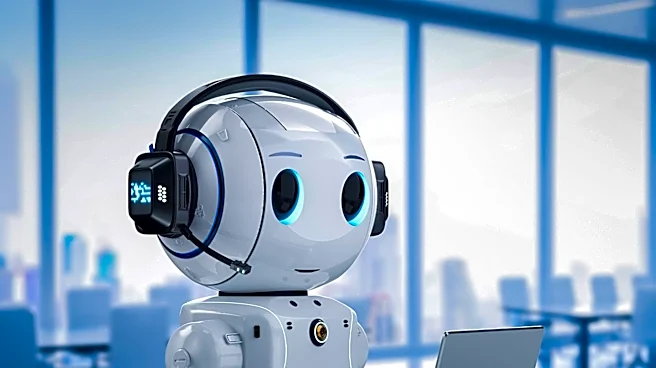
AI virtual assistants are advancing beyond simple reactive responses to proactively engage users and integrate deeply into business operations. These software tools leverage artificial intelligence to understand natural language, process requests, and assist users in completing
tasks. In a business context, AI assistants can manage customer service inquiries, streamline internal task management, facilitate document retrieval for HR, and support data analysis and marketing efforts. The core functionality involves speech recognition, natural language processing (NLP), and data retrieval, allowing assistants to receive requests, analyze context, perform tasks by connecting to various databases and software, and generate appropriate responses. This evolution enables AI assistants to offer personalized experiences, provide 24/7 support, and significantly reduce manual workloads across various departments.
Why It's Important?
The increasing sophistication of AI virtual assistants holds significant implications for U.S. businesses and the broader economy. By automating routine tasks, these assistants can drastically improve operational efficiency and productivity, allowing human employees to focus on more complex, high-value work. This shift can lead to cost savings, enhanced customer satisfaction through faster and more consistent support, and better resource allocation. Industries such as customer service, human resources, marketing, and IT stand to gain substantially from these advancements. The ability of AI assistants to integrate with existing enterprise software like CRM and ERP systems means they can become central to business workflows, driving data-driven decision-making and fostering a more agile operational environment. Companies that adopt and effectively implement these technologies are likely to gain a competitive edge, while those that lag may face challenges in efficiency and customer engagement.
What's Next?
The future of AI virtual assistants points towards greater autonomy and more complex task execution. Businesses will increasingly explore custom AI solutions tailored to their specific needs, especially when off-the-shelf options fall short in handling specialized processes or require deep integration with proprietary data. The development of AI agents, which can plan and execute multi-step tasks independently, represents the next frontier. These agents will move beyond mere assistance to actively manage projects, generate content, and analyze campaign performance with minimal human intervention. This progression will necessitate robust frameworks for data security, privacy, and ethical AI deployment to ensure responsible and effective integration into business operations. Further advancements in natural language understanding and machine learning will continue to refine their capabilities, making them indispensable tools for modern enterprises.
Beyond the Headlines
The widespread adoption of advanced AI virtual assistants raises several deeper implications. Ethically, there will be ongoing discussions about job displacement as AI takes over more tasks, necessitating strategies for workforce retraining and adaptation. Legally, questions surrounding data privacy, accountability for AI-driven decisions, and intellectual property generated by AI will become more prominent, requiring new regulatory frameworks. Culturally, the increasing interaction with AI could reshape human-computer relationships and alter expectations for service and efficiency. The long-term shift could see businesses operating with highly integrated AI ecosystems, where intelligent agents manage vast swathes of operations, leading to unprecedented levels of automation and data utilization. This transformation will demand a careful balance between technological advancement and societal well-being, ensuring that AI serves to augment human capabilities rather than diminish them.