





What's Happening?
Ford Motor Company is undergoing a significant transformation, leveraging advanced technologies like AI and virtual reality (VR) to streamline its car design process. John “Rex” Allen, a veteran clay sculptor at Ford, now uses VR headsets to refine designs,
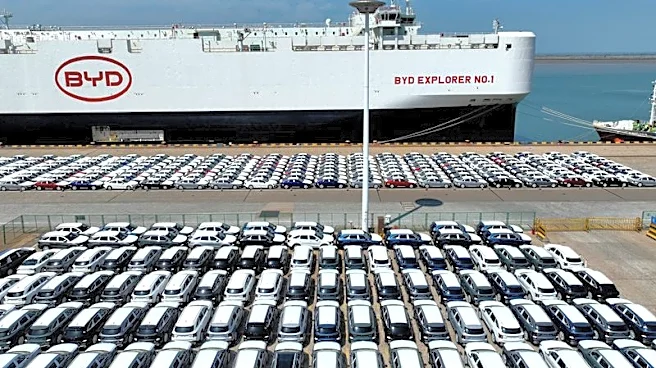
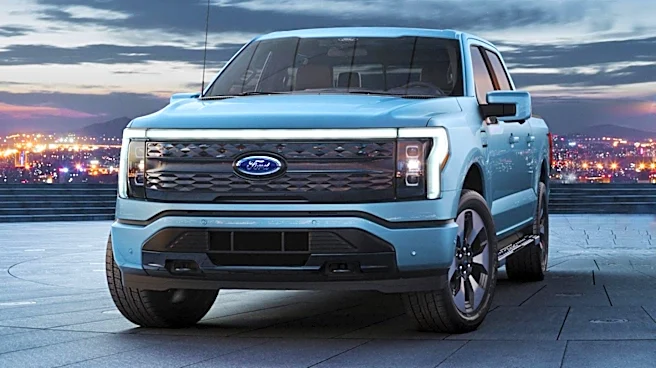
reducing the time it takes to sculpt a full-size model from two weeks to five days for a design theme. This technological integration is part of a broader strategy to accelerate product development, especially as Ford aims to refresh approximately 80% of its North American portfolio between 2027 and 2029. The company's new World HQ in Dearborn, Michigan, opened in November 2025, is designed to foster efficiency and collaboration. Ford's financial performance in 2025 showed its commercial arm, Ford Pro, earning $6.8 billion, more than double its gas and hybrid business (Ford Blue), which made $3 billion. Conversely, its EV unit, Model e, incurred a $4.8 billion loss, prompting a strategic shift in its electric vehicle approach. Ford is now focusing on designing EVs with smaller, more efficient batteries and improved aerodynamics to achieve cost parity with Chinese manufacturers like BYD.
Why It's Important?
This strategic pivot by Ford has significant implications for the U.S. automotive industry and its competitive landscape. By integrating AI and VR into design, Ford is not only accelerating its product development cycle but also potentially setting new industry standards for efficiency and innovation. The focus on cost-effective EV design, driven by insights from analyzing Chinese OEM vehicles, indicates a pragmatic approach to the challenging EV market. This could lead to more affordable and competitive electric vehicles for U.S. consumers, potentially boosting EV adoption. Furthermore, the success of Ford Pro highlights the growing importance of commercial vehicle segments for traditional automakers, providing a stable revenue stream amidst the volatile EV transition. The creation of Ford Energy, a new business unit focused on energy storage solutions, also signals Ford's ambition to diversify its revenue streams and capitalize on the growing demand for battery technology beyond just vehicles, impacting the broader energy sector.
What's Next?
Ford plans to launch its first vehicle on the new Universal EV platform, the Fathom, a midsize electric pickup priced at $28,350, in 2027. This vehicle is designed to offer advanced features like bidirectional charging capabilities without requiring expensive inverters. Concurrently, Ford Energy, established with a $2 billion investment, will begin production in late 2027, retooling a Kentucky plant to manufacture batteries for utilities, renewable energy developers, and data centers. This move signifies Ford's expansion into the energy storage market, leveraging its battery technology licenses. The company's aggressive refresh of its North American vehicle portfolio between 2027 and 2029 will heavily rely on the accelerated design processes enabled by VR and AI. Ford's chief operating officer, Kumar Galhotra, indicated that the company is still in the early stages of applying AI to manufacturing physical goods, suggesting further advancements in factory automation and efficiency are on the horizon.
Beyond the Headlines
The integration of AI and VR in Ford's design process represents a broader trend of digital transformation in traditional manufacturing sectors. While these technologies enhance efficiency, they also raise questions about the future of skilled labor, as seen with sculptor John Allen's initial concerns about automation. However, the current application suggests a hybrid approach where technology augments human expertise rather than fully replacing it, preserving specialized skills while boosting productivity. Ford's strategic shift in its EV unit, Model e, reflects a critical re-evaluation of the EV market's realities, moving away from a sole focus on battery cost reduction to a more holistic approach emphasizing overall system efficiency. This pragmatic adjustment could influence other automakers to adopt similar strategies, fostering a more sustainable and competitive EV market. The establishment of Ford Energy also highlights the evolving role of automotive companies as broader energy solution providers, blurring the lines between traditional industries and creating new economic ecosystems.