


What's Happening?
Carlos Moreira, CEO of SEALSQ, a Swiss company specializing in post-quantum semiconductors and security systems with a presence in the U.S., is urging American CEOs to address the 'harvest now, decrypt later' quantum threat immediately. This strategy
involves adversaries copying sensitive data today, even if they cannot decrypt it, with the expectation that powerful quantum computers will eventually be able to break current encryption methods. Moreira emphasizes that this is not a future problem but one already influencing security decisions, affecting governments, financial institutions, healthcare, critical infrastructure, and any organization managing valuable intellectual property. The transition to post-quantum security is a long industrial process, as devices like car ECUs and grid sensors can remain in service for decades.
Why It's Important?
This warning is critically important for U.S. businesses and national security. The 'harvest now, decrypt later' threat means that data considered secure today could be compromised in the future, potentially leading to massive breaches of confidential information, trade secrets, and classified data. For U.S. industries, particularly those in finance, healthcare, and critical infrastructure, the implications are severe, including regulatory penalties, loss of public trust, and significant economic damage. The long lifecycle of many embedded systems means that a proactive approach to post-quantum cryptography (PQC) is essential to avoid a costly and disruptive transition later. CEOs who delay investment risk facing higher costs, greater operational risks, and regulatory pressure.
What's Next?
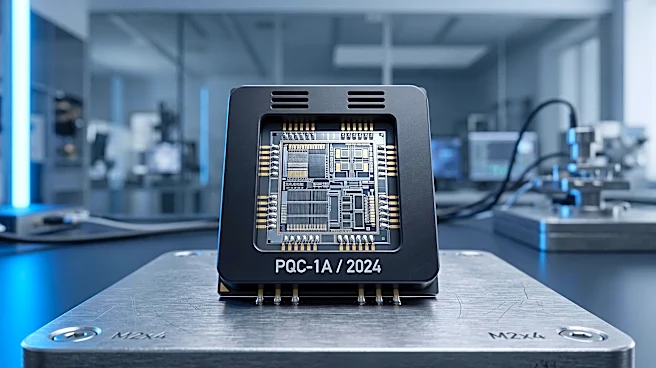
Moreira advises U.S. organizations to integrate post-quantum security into their long-term resilience strategies, similar to how cybersecurity is managed today. This involves investing in PQC solutions now, even before the market fully understands the technology. The transition will require replacing billions of connected devices, upgrading infrastructure, certifying new hardware, and adapting supply chains. SEALSQ, through partnerships like the one with GlobalFoundries, is working to develop secure semiconductor platforms with certified post-quantum security IP. This suggests a future where hardware-based security and secure supply chains become paramount. Organizations will need to build teams comfortable with uncertainty, educate customers, and collaborate with regulators and standards organizations.
Beyond the Headlines
The 'harvest now, decrypt later' scenario highlights a unique temporal challenge in cybersecurity. Unlike traditional threats, where the compromise is immediate, this threat involves a delayed but potentially catastrophic impact. This raises ethical questions about data stewardship and the responsibility of current leaders to protect information far into the future. Culturally, it demands a shift from reactive security measures to proactive, long-term strategic planning. The need for trusted manufacturing partners and complete traceability in the semiconductor supply chain also underscores the geopolitical dimensions of quantum security, as countries increasingly view semiconductors as critical infrastructure. This could lead to greater emphasis on sovereign manufacturing capabilities and diversified production to ensure national security.