
What's Happening?
CMA CGM Group, a global leader in shipping and logistics, and China Communications Construction Company Limited (CCCC), a major infrastructure group, have signed a Memorandum of Understanding (MOU). This
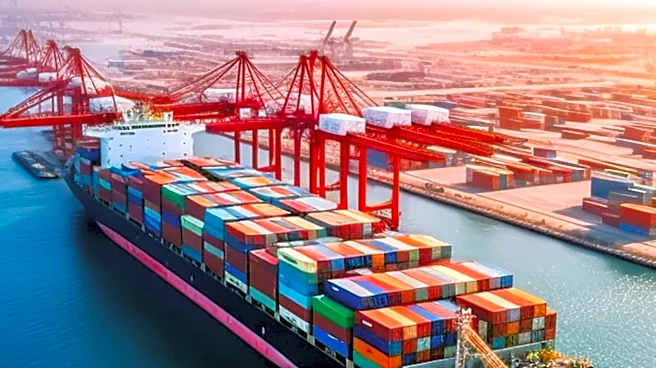
agreement aims to strengthen their global cooperation across port infrastructure, logistics, transport services, innovation, and the energy transition. The partnership will focus on exploring joint opportunities in Africa, China, Southeast Asia, the Middle East, and Latin America. The MOU combines CCCC's expertise in developing and constructing large-scale infrastructure projects with CMA CGM's global shipping network, terminal operations, and logistics solutions, including those provided by its subsidiary CEVA Logistics. The collaboration seeks to integrate port construction with cargo flows, hinterland infrastructure, and long-term supply-chain operations. This builds upon an existing relationship, with CCCC subsidiaries like China Harbour Engineering Company (CHEC) already partnering with CMA CGM in projects such as the Lekki Freeport Terminal in Nigeria and the Kribi Container Terminal in Cameroon. The agreement also includes exploring digital and AI solutions for automated port terminals and inland logistics platforms, as well as developing lower-carbon port and supply chain solutions.
Why It's Important?
This strategic partnership is significant for the global logistics and shipping industries, particularly in the U.S., as it could influence international trade routes and supply chain efficiencies. By integrating infrastructure development with operational expertise, the collaboration aims to reduce bottlenecks and improve the flow of goods, which can have a ripple effect on global commerce. Enhanced port and logistics infrastructure in key regions like Africa, Southeast Asia, and Latin America could lead to more reliable and cost-effective shipping for U.S. businesses engaged in international trade. The focus on digitalization and lower-carbon solutions also aligns with growing global demands for sustainable and technologically advanced supply chains. U.S. companies relying on these international routes for imports and exports could benefit from improved transit times and reduced logistical complexities. Conversely, increased efficiency in these regions could intensify competition for U.S. logistics providers and port operators, necessitating continuous innovation to maintain competitiveness.
What's Next?
The MOU establishes a framework for future collaboration, meaning specific projects, investment commitments, and implementation timetables are yet to be disclosed. The next steps will involve identifying and developing concrete projects, which could include joint ventures, equity investments, construction contracts, terminal concessions, and logistics service agreements. Both companies will likely begin exploring opportunities to deploy digital and AI solutions for greater automation and operational efficiency at terminals and inland logistics platforms. Additionally, they will investigate renewable energy projects and infrastructure to support alternative fuels for various modes of transport, aligning with CMA CGM's goal of achieving Net Zero Carbon by 2050. The success of this partnership will depend on regulatory approvals, local partnerships, and the ability to effectively integrate their diverse capabilities across different regions. Stakeholders, including other shipping lines, port operators, and logistics providers, will closely monitor the development of this collaboration for its potential impact on market dynamics and competitive landscapes.
Beyond the Headlines
This partnership extends beyond conventional infrastructure development by aiming to create a more holistic and integrated approach to global supply chains. The emphasis on connecting port construction directly with cargo flows, hinterland infrastructure, and long-term operational efficiency addresses a critical challenge in global trade: the disconnect between physical infrastructure and logistical execution. By bringing together a major infrastructure developer and a leading shipping and logistics provider, the initiative seeks to optimize the entire supply chain ecosystem, from port to hinterland. The focus on digitalization and decarbonization also highlights a broader industry trend towards sustainability and technological advancement. This collaboration could set a new precedent for how large-scale infrastructure projects are conceived and executed, potentially influencing future international partnerships in the logistics sector. The long-term implications include the potential for more resilient and environmentally friendly global trade networks, which could benefit consumers and businesses worldwide by reducing costs and improving delivery times.