





What's Happening?
The global logistics market is forecast to expand significantly, with projections indicating a market size of $24.36 trillion by 2035. This growth represents a compound annual growth rate (CAGR) of 8.05% from 2025, when the market is estimated at $11.23
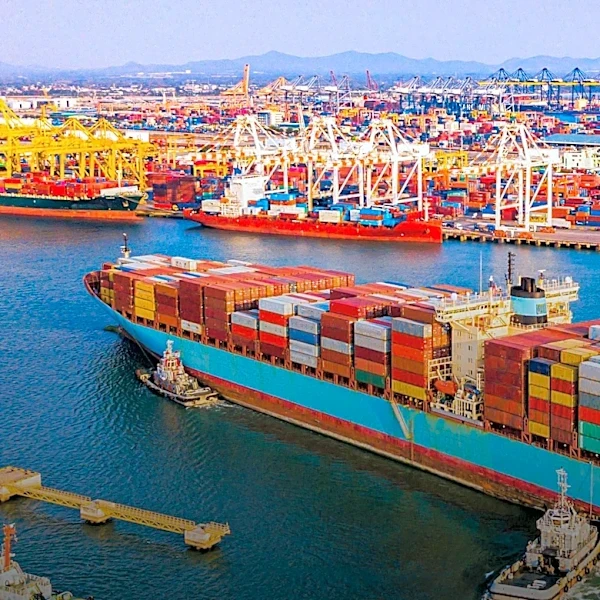
trillion, and $12.68 trillion in 2026. This expansion is driven by several structural forces, including global supply chain restructuring, the integration of regional trade blocs, and technological advancements. Despite discussions of 'de-globalization,' the actual volume of cross-border goods flow continues to increase, though its structure is evolving. E-commerce penetration and the rise of the middle class in emerging markets are boosting demand for parcel and express delivery services. Manufacturing supply chains are shifting from solely pursuing the lowest cost to balancing cost with resilience, leading to strategies like 'China+1' and nearshoring, which extend intermediate goods trade routes and increase the complexity and frequency of logistics services. The industrial and manufacturing sectors are expected to remain the largest end-users of logistics services, accounting for 31.78% of the market share in 2025, indicating their continued role as a core engine for logistics demand.
Why It's Important?
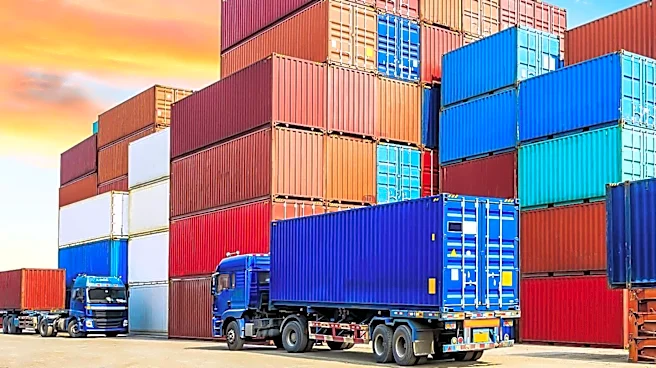
This projected growth in the global logistics market signifies a fundamental shift in international trade and supply chain dynamics, with substantial implications for U.S. industries and economic stakeholders. The move towards 'China+1' and nearshoring strategies, driven by a desire for supply chain resilience, could lead to increased manufacturing and logistics activities within North America. This could benefit U.S. logistics providers, infrastructure development, and potentially create new job opportunities in the transportation and warehousing sectors. The emphasis on regionalization and multi-node networks for manufacturing will likely increase demand for coordinated warehousing, distribution, and transportation services within the U.S. Furthermore, the report highlights the dominance of road transport, which holds the largest share at 39.04%, suggesting that domestic and regional overland transport remains crucial. This trend, coupled with the digital upgrading of road transport through AI route optimization and real-time tracking, presents opportunities for U.S. technology companies and logistics firms to innovate and improve efficiency. Companies that can integrate data, forecast demand, and coordinate multimodal transportation will be the future winners, encouraging investment in smart logistics solutions across the U.S.
What's Next?
The global logistics market is expected to continue its trajectory of growth, with a focus on technological integration and supply chain resilience. Companies will likely further invest in AI and digitalization for route optimization, demand forecasting, smart warehousing, and autonomous transportation to enhance efficiency and address labor shortages. The shift towards 3PL and contract logistics is anticipated to accelerate as businesses seek flexibility and specialized services, creating opportunities for U.S. logistics providers to expand their offerings. Policymakers and corporate decision-makers in the U.S. will need to monitor these trends closely, as logistics market data will serve as a 'comprehensive dashboard' for observing international trade flows and economic integration. Continued investment in infrastructure and the adoption of advanced logistics technologies will be crucial for the U.S. to maintain a competitive edge in the evolving global trade landscape. The expansion of e-commerce and the growing middle class will sustain demand for efficient last-mile delivery solutions, prompting further innovation in urban logistics and distribution networks.
Beyond the Headlines
The profound restructuring of the global logistics market extends beyond mere economic figures, touching upon deeper implications for national security, environmental sustainability, and labor markets. The drive for supply chain resilience, moving away from solely cost-driven models, reflects a geopolitical awareness of vulnerabilities exposed by recent global events. This could lead to a re-evaluation of trade partnerships and a greater emphasis on domestic or nearshore production, potentially strengthening national economies but also increasing costs for consumers. Environmentally, the growth in logistics, particularly road transport, poses challenges for carbon emissions, necessitating accelerated development and adoption of electric vehicles and sustainable logistics practices. The integration of AI and automation, while boosting efficiency, also raises ethical questions about job displacement in the logistics sector and the need for workforce retraining. Furthermore, the increasing reliance on digital technologies in logistics heightens cybersecurity risks, requiring robust protective measures to safeguard critical infrastructure and sensitive data. The evolution of logistics is not just about moving goods; it's about reshaping global economic power, environmental impact, and the future of work.