


What's Happening?
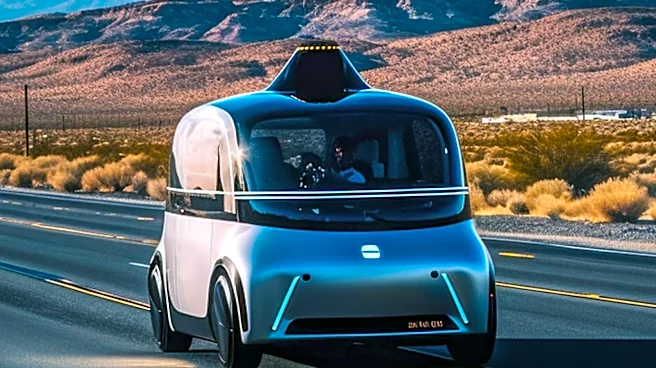
JPMorgan Chase & Co. has reported on Tesla's strategic focus following a meeting with the EV manufacturer's management in Fremont, California. According to the investment bank, Tesla is prioritizing the scaling of its Cybercab operations and is intentionally
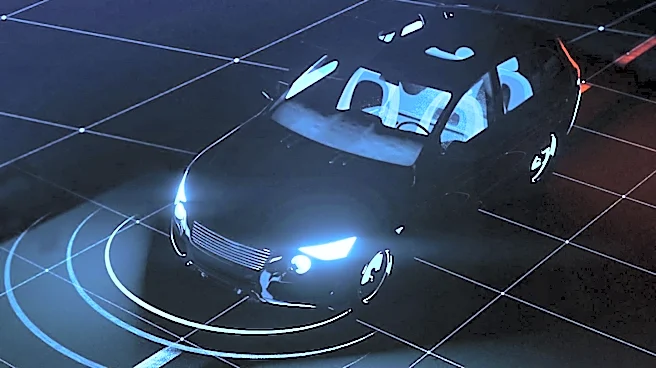
holding back on adding more Model Y units to its robotaxi fleet. Tesla expressed confidence in its ability to expand Cybercab in the near term. The company also indicated that the Cybercab is merely the initial form factor, with plans for additional vehicle types to evolve from this platform, referencing the 'Obovan' concept. Furthermore, Tesla highlighted its Full Self-Driving (FSD) V15 as a significant 'step-change in performance,' noting that approximately 40% of its seven core technologies are currently being tested in the robotaxi fleet with encouraging initial feedback. The company confirmed that its HW4 hardware is capable of running FSD V15 and unsupervised FSD, with the AI4.5 compute system designed to accommodate future demands.
Why It's Important?
This report from JPMorgan underscores Tesla's aggressive push into autonomous ride-sharing and its long-term vision for diversified vehicle platforms. The decision to prioritize Cybercab scaling over expanding the Model Y robotaxi fleet suggests a strategic shift towards a dedicated autonomous vehicle service, potentially disrupting traditional transportation models. The anticipated 'step-change' in FSD V15 performance could accelerate the adoption of autonomous driving technology, impacting regulatory frameworks, insurance industries, and urban planning. If successful, Tesla's Cybercab and subsequent vehicle types could redefine personal mobility and logistics, creating new economic opportunities while posing challenges to existing automotive and transportation sectors. The emphasis on future-proofing hardware with AI4.5 also highlights Tesla's commitment to advanced AI capabilities, which could set new industry standards for autonomous systems.
What's Next?
Tesla is expected to continue developing and testing its FSD V15, with further integration into the robotaxi fleet. The company's focus on scaling Cybercab operations suggests an imminent expansion of its autonomous ride-sharing service. The reveal of the Optimus Gen 3 robot is anticipated closer to its production start at Fremont, with commercial sales projected to begin by the second half of 2027. The experience gained from Gen 3 will inform the 'capability, cost, and scalability' of the Gen 4 robot. Investors and the automotive industry will be closely watching for updates on Cybercab deployment, the performance of FSD V15 in real-world scenarios, and the progress of the Optimus robot, as these developments could significantly influence Tesla's market position and the broader autonomous technology landscape.
Beyond the Headlines
Tesla's strategy to prioritize Cybercab and develop new vehicle types from its platform could have profound implications beyond transportation. The 'Obovan' concept, if realized, suggests a modular approach to vehicle design, potentially enabling a wide range of applications from passenger transport to specialized delivery services. This could lead to a more efficient utilization of resources and a reduction in vehicle ownership. The advancements in FSD V15 and the development of the Optimus robot also hint at a future where AI-driven automation plays a central role in both mobility and labor. Ethical considerations surrounding autonomous decision-making, job displacement due to robotics, and data privacy in a highly connected vehicle ecosystem will become increasingly critical as these technologies mature and become more widespread.