






What's Happening?
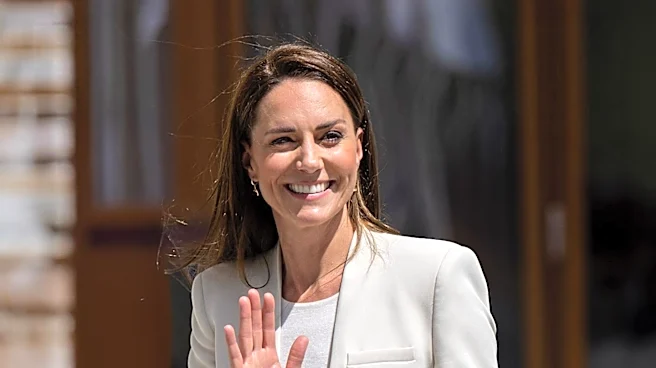
Kate Middleton, the Princess of Wales, has consistently participated in the National Service of Remembrance at the Cenotaph in London since 2011, the year of her marriage to Prince William. This annual ceremony, held on the second Sunday of November,
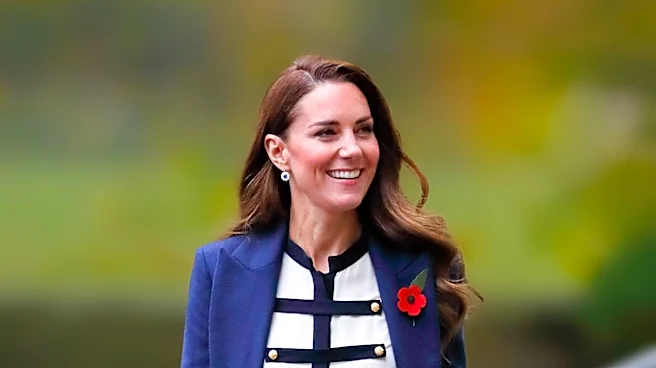
honors service members who have died in war and involves a church service, wreath-laying, and a formal procession. The Princess is noted for her sustainable approach to fashion, frequently re-wearing outfits, jewelry, and accessories for these somber occasions. She often incorporates a red poppy pin, a symbol associated with the holiday, sometimes wearing three, which some theorize is a personal tribute to her great-grandmother's three brothers who died in World War I. Her attire has included pieces from designers like Catherine Walker, Alexander McQueen, and Diane von Furstenberg, often accessorized with heirloom jewelry from Queen Elizabeth II and Princess Diana.
Why It's Important?
The Princess of Wales's consistent presence and thoughtful attire at Remembrance Sunday events underscore the British royal family's enduring role in national commemoration and tradition. Her practice of re-wearing outfits and incorporating meaningful symbols like the poppy pin reinforces a message of sustainability and respect for tradition, which can influence public perception and fashion choices. This approach also highlights the importance of remembrance and honoring military service, a value deeply embedded in British society. By publicly participating in these solemn events, she helps to maintain the visibility and significance of such commemorations for future generations, ensuring that the sacrifices of service members are not forgotten.
Beyond the Headlines
Kate Middleton's sartorial choices for Remembrance Sunday extend beyond mere fashion; they are a form of visual communication that conveys respect, continuity, and personal connection to history. Her frequent re-wearing of garments and jewelry, including pieces from past royals, subtly links her to the lineage of the monarchy and its historical role. The symbolic use of multiple poppy pins, while not officially confirmed, adds a layer of personal tribute that humanizes the royal figure and allows for public interpretation and connection. This blend of personal and public symbolism in her attire contributes to the narrative of the modern monarchy as both traditional and relatable, capable of honoring the past while engaging with contemporary values like sustainability.