






What's Happening?
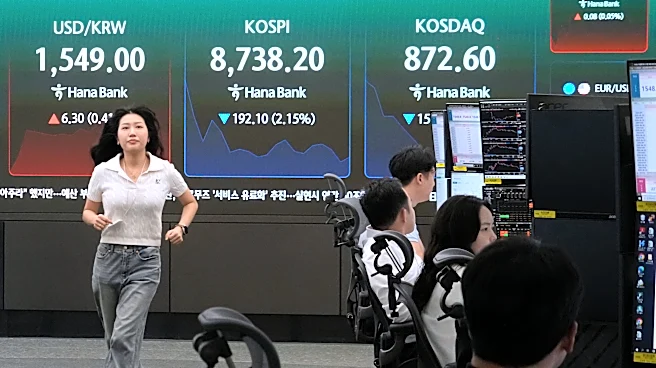
In the first half of 2026, shares in semiconductor and memory chip manufacturers have experienced significant growth, driven by increased demand from AI companies. This surge has been particularly notable in the Asia Pacific region, with South Korea's
Kospi index rising by 125%, largely due to the performance of companies like Samsung and SK Hynix. In the U.S., companies such as Sandisk, Western Digital, Micron, and Seagate have seen their stock prices soar, with Sandisk's shares increasing by 780% this year. However, there are signs that this boom may be faltering as investors begin to shift their focus from tech stocks to other sectors. This shift has been partly attributed to concerns over the high spending plans of leading AI companies, which could impact their cash flow and make them more capital-intensive.
Why It's Important?
The rapid increase in chipmakers' stock prices highlights the critical role of semiconductors in the AI industry, as these components are essential for powering data centers and AI applications. The shift in investor focus from software to hardware stocks underscores the changing dynamics within the tech sector, where hardware is gaining prominence due to its direct link to AI advancements. However, the potential slowdown in the chip stock boom could have broader implications for the tech industry, affecting companies' investment strategies and possibly leading to a reevaluation of the current market valuations. This situation also reflects the volatility and speculative nature of tech investments, where rapid gains can quickly reverse.
What's Next?
As the second half of 2026 approaches, market analysts will be closely monitoring the performance of chipmakers to assess whether the current slowdown is a temporary adjustment or the beginning of a more sustained decline. Companies may need to adjust their strategies to maintain investor confidence, possibly by demonstrating sustainable growth and managing their capital expenditures effectively. Additionally, geopolitical factors, such as trade relations and regulatory decisions, could influence the semiconductor market's trajectory. Investors and industry stakeholders will be watching for any policy changes or economic indicators that could impact the demand for chips and the overall health of the tech sector.