
What's Happening?
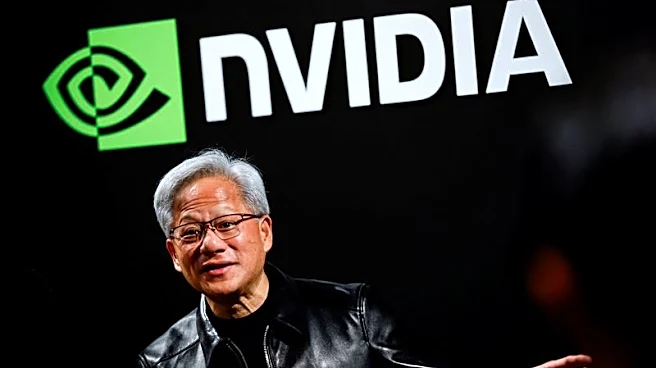
Broadcom (NasdaqGS:AVGO) is gaining increased attention following the resignation of Nvidia's CEO amidst a national security investigation, which has triggered a shake-up in the artificial intelligence
(AI) sector. This leadership uncertainty at Nvidia is prompting enterprise AI customers to re-evaluate their supplier exposure and consider alternative chip partners, including Broadcom and AMD. Investors are now reassessing their AI infrastructure allocations, with growing interest in Broadcom's role in custom accelerators, networking hardware, and software ecosystems. Broadcom, a U.S. semiconductor group valued at approximately $1.6 trillion, already supplies custom accelerators, networking chips, and infrastructure software to many large cloud and enterprise buyers for their AI workloads. This existing relationship positions Broadcom favorably as clients reconsider their reliance on any single GPU vendor.
Why It's Important?
The disruption at Nvidia presents a significant opportunity for Broadcom to expand its market share in the burgeoning AI infrastructure sector. Uncertainty surrounding Nvidia's leadership encourages large cloud and AI customers to diversify their sourcing of GPUs and XPUs, reducing concentration risk. Broadcom's established presence with many of these clients through its custom accelerators and networking hardware creates a natural opening for the company to secure a larger portion of future AI builds. While Broadcom's existing narrative already accounts for its strengths in custom XPUs, Ethernet networking, and VMware-based Private AI Cloud, the Nvidia situation reinforces the demand side of this story. However, it also highlights the ongoing need for Broadcom to manage AI XPV financing exposure and potential pressure on gross margins from AI products, as the market continues to evolve rapidly.
What's Next?
Investors should closely monitor how Broadcom's disclosed AI semiconductor revenue guidance for 2026 to 2028 evolves, particularly its $58 billion target for 2026 and management's booking updates related to hyperscale XPUs and networking. Any changes in these figures will indicate the extent to which Nvidia's leadership shock is translating into new orders for Broadcom. The company's ability to capitalize on this shift will depend on its capacity to meet increased demand and maintain its competitive edge in custom AI solutions. The market will also be watching for further developments in the broader AI infrastructure landscape, including how other competitors respond to Nvidia's challenges and how enterprise customers adjust their long-term AI strategies.
Beyond the Headlines
The situation with Nvidia and the subsequent opportunities for Broadcom highlight a broader trend in the technology sector: the increasing importance of supply chain resilience and diversification, especially in critical areas like AI. The reliance on a single dominant vendor, even one as powerful as Nvidia, can create vulnerabilities for large enterprises. This event could accelerate a strategic shift among major AI consumers towards multi-vendor strategies, not just for hardware but also for software and infrastructure. This move could foster a more competitive and robust AI ecosystem, potentially leading to more innovation and better pricing for end-users in the long run. It also underscores the geopolitical sensitivities surrounding advanced semiconductor technology, as national security investigations can have far-reaching impacts on global supply chains and corporate leadership.