







What's Happening?
The 'tradwife' movement, which promotes traditional gender roles and domesticity, is being critically examined for its implications on gender and racial hierarchies. A study by Sophia Sykes and Veronica Hopner analyzed 36 'tradwife' profiles, identifying
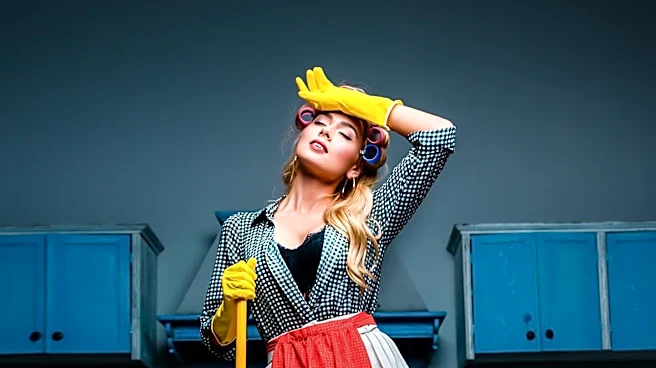
common traits such as anti-feminism and right-wing ideology. The movement has been monetized through social media, with influencers gaining significant followings. This phenomenon is seen as a reaction to modern women's exhaustion, packaged in a nostalgic and commercially profitable fantasy. The movement's aesthetic and ideology have sparked debates about the commodification of traditional femininity and its impact on societal norms.
Why It's Important?
The 'tradwife' movement's rise highlights ongoing tensions between traditional and modern gender roles. Its popularity on social media underscores the power of digital platforms in shaping cultural narratives. The movement's association with right-wing ideologies raises concerns about its potential to reinforce outdated gender norms and racial hierarchies. As influencers monetize this trend, it challenges feminist ideals and prompts discussions about the role of women in society. The movement's impact on public perception of gender roles could influence policy debates and cultural shifts regarding women's rights and equality.
Beyond the Headlines
The 'tradwife' movement's emphasis on traditional domestic roles raises questions about the intersection of race and gender. Historically, Black women have been excluded from the domestic ideal celebrated by the movement. This highlights the need to consider diverse perspectives in discussions about gender roles. The movement's portrayal of domesticity as leisure rather than labor contrasts with the historical reality for many women of color, who have long engaged in domestic work out of necessity. This underscores the importance of recognizing and valuing diverse experiences in conversations about gender and domesticity.