







What's Happening?
Alexandra Horowitz has conducted significant research into the olfactory capabilities of dogs, detailing how their brains process information through scent. Her work, including the book 'Being a Dog: Following the Dog into a World of Smell,' explores
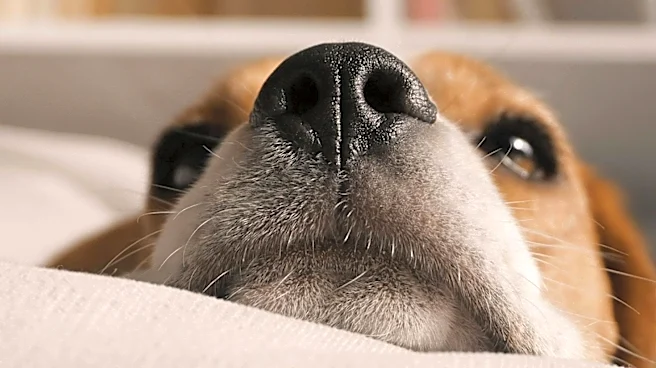
the mechanics of dogs' noses and the mental stimulation derived from sniffing. This research underscores that dogs possess an extraordinary sense of smell, a trait utilized in various professional roles such as search and rescue, disease identification, and even detecting bed bugs. Horowitz's findings suggest that even pet dogs, regardless of their training, share these inherent abilities and have a fundamental need to exercise their sense of smell. The concept of a 'sniff walk' is introduced as a way for dog owners to allow their pets to engage with their environment through scent, likening this activity to a dog's version of social media, where they absorb information about the world around them.
Why It's Important?
This research is important for dog owners and the broader understanding of canine behavior, as it redefines the purpose and benefits of dog walks. By emphasizing the mental stimulation dogs gain from sniffing, Horowitz's work encourages owners to prioritize quality over quantity during walks, allowing dogs to explore their environment through scent. This shift in perspective can lead to improved well-being for dogs, addressing their innate need to use their powerful noses. For the pet industry, this understanding could influence the development of new products and services focused on olfactory enrichment. Furthermore, the analogy of a 'sniff walk' as a dog's 'social media' provides a relatable framework for owners to understand and appreciate their pets' engagement with the world, fostering a deeper bond and more fulfilling interactions. It also highlights the potential for further scientific exploration into canine cognition and sensory perception.
What's Next?
The insights from Alexandra Horowitz's work are likely to continue influencing dog training methodologies and owner practices. We can anticipate a growing emphasis on 'sniff walks' and scent-based activities as beneficial for canine mental health and enrichment. Dog trainers and behaviorists may integrate these concepts more formally into their programs, advocating for owners to allow their dogs more freedom to explore scents during outings. Educational resources, such as workshops and online content, are expected to emerge, guiding owners on how to facilitate effective sniff walks and understand their dogs' olfactory experiences. Additionally, the scientific community may pursue further research into the neurological and behavioral impacts of scent exploration in dogs, potentially leading to new applications in areas like therapy dogs or detection work. The broader pet care industry might also see an increase in demand for toys and tools designed to engage a dog's sense of smell.
Beyond the Headlines
Beyond the immediate implications for dog owners and trainers, Alexandra Horowitz's research delves into the profound sensory world of dogs, offering a unique perspective on how other species perceive reality. By highlighting the dog's primary reliance on smell, her work challenges anthropocentric views and encourages a more empathetic understanding of animal cognition. This shift in perspective can foster a greater appreciation for biodiversity and the diverse ways life forms interact with their environments. Ethically, it prompts questions about how humans, as caregivers, can better cater to the natural instincts and sensory needs of their companion animals, moving beyond purely physical exercise to include mental and sensory enrichment. Culturally, it could lead to a broader societal recognition of dogs not just as pets, but as complex beings with rich inner lives, influencing how they are portrayed in media and treated in public spaces. This deeper understanding can ultimately enhance human-animal bonds and promote more holistic animal welfare practices.