






What's Happening?
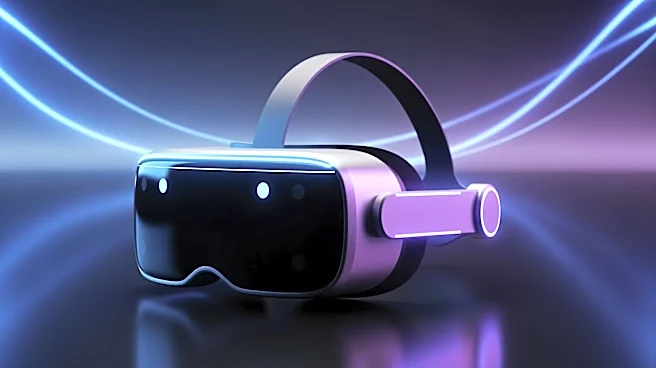
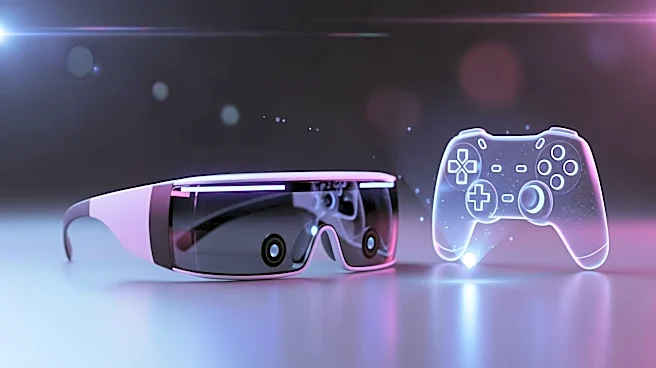
Qualcomm has announced the Snapdragon Reality Elite, a new processor designed to improve the performance and efficiency of extended reality (XR) headsets and glasses. This announcement was made at the Augmented World Expo (AWE). The Snapdragon Reality Elite aims
to support applications such as AI assistants, photorealistic avatars, and real-time digital object generation within mixed reality environments. The processor is capable of delivering up to 48 trillion operations per second (TOPS) of AI performance, allowing large language models and vision models to run directly on the device without the need for cloud processing. The new chipset offers significant improvements in GPU, CPU, and neural processing performance compared to its predecessor, the Snapdragon XR2+ Gen 2. It also supports high-resolution displays and offers longer battery life and cooler operation, paving the way for lighter and more comfortable XR devices.
Why It's Important?
The introduction of the Snapdragon Reality Elite is significant for the XR industry as it addresses the growing demand for more advanced and integrated XR platforms. With over 60 million XR devices already in the market, the need for technologies that offer higher performance, greater intelligence, and improved power efficiency is increasing. Qualcomm's new processor is designed to meet these demands, enabling faster, longer-lasting, and more immersive XR experiences. This development reinforces Qualcomm's leadership in the virtual reality (VR) and mixed reality (MR) sectors and is expected to influence the design and capabilities of future XR devices. The processor's ability to operate cooler and more efficiently also suggests potential for broader adoption in consumer and enterprise markets.
What's Next?
The Snapdragon Reality Elite is expected to debut in several upcoming XR devices, including the XREAL Aura AR glasses and a future headset from Play for Dream. As the XR market continues to expand, more manufacturers are likely to adopt Qualcomm's new processor to enhance their products. This could lead to a new wave of XR devices that are more compact, efficient, and capable of delivering high-quality immersive experiences. The processor's support for Google's Android XR operating system further indicates its potential integration into a wide range of devices, potentially setting new standards for XR technology.