






What's Happening?
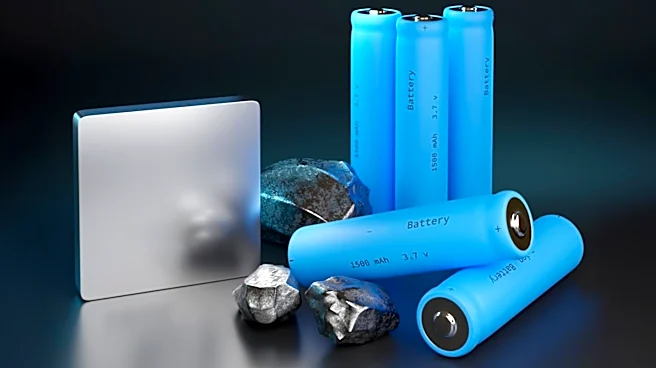
The Black Friday and Cyber Monday sales events, particularly the surge in electronics purchases, are underscoring the United States' significant reliance on critical minerals, according to a report by Mining.com.au. These minerals, including lithium,
cobalt, rare earths, copper, and nickel, are essential for modern electronics, high-tech manufacturing, and electric vehicles. While U.S. retail sales are projected to exceed $85 billion during this period, the supply chains for these critical minerals remain under pressure. China currently dominates the refining and processing capacity for many of these metals, with Benchmark Mineral Intelligence predicting this control will continue until at least 2030. The McKinsey Global Institute highlights electronics as a major source of global trade vulnerabilities, with products like smartphones and laptops being particularly exposed to supply concentration and disruption. The U.S. and Europe-30 face lower exposure to imported upstream inputs compared to Asian economies, but still heavily rely on finished critical products.
Why It's Important?
The U.S. reliance on imported critical minerals, especially from China, poses significant economic and national security implications. The concentration of refining and processing capacity in China creates a vulnerability for American industries that depend on these materials for manufacturing everything from smartphones to electric vehicles and defense technologies. This dependency could lead to supply disruptions, increased costs, and hinder technological innovation and the transition to clean energy. The push to grow domestic refining and processing industries in the U.S., EU, Canada, and Australia, along with increasing trade agreements among allied countries, is crucial for de-risking these supply chains. However, building out independent capacity requires substantial capital investment and time, indicating a challenging path ahead for Western nations to secure their critical mineral supplies.
What's Next?
The U.S. and its allies are expected to continue efforts to strengthen domestic critical mineral processing and refining capabilities and forge new trade agreements to diversify supply sources. This will involve long-term investments in infrastructure and technology, as well as streamlining permitting processes for new mining and processing operations. The focus will also be on developing a more robust circular economy for critical minerals, encouraging the recycling and reuse of electronic devices to recover valuable materials. As demand for high-tech products and clean energy technologies continues to grow, the competition for these essential resources will intensify, making the development of resilient and diversified supply chains a top priority for U.S. policymakers and industries.
Beyond the Headlines
Beyond the immediate economic and supply chain concerns, the critical minerals race has deeper geopolitical and environmental implications. The dominance of certain nations in the supply chain can be leveraged for political influence, potentially impacting international relations and trade policies. Environmentally, the extraction and processing of these minerals can have significant ecological footprints, raising concerns about sustainable mining practices and the ethical sourcing of materials. The concept of an 'urban mine' – recovering critical minerals from discarded electronics – presents a promising avenue for reducing environmental impact and enhancing material security. However, widespread adoption of circular economy principles requires significant shifts in consumer behavior, product design, and waste management infrastructure, highlighting a complex interplay of technological, economic, and societal challenges.