




What's Happening?
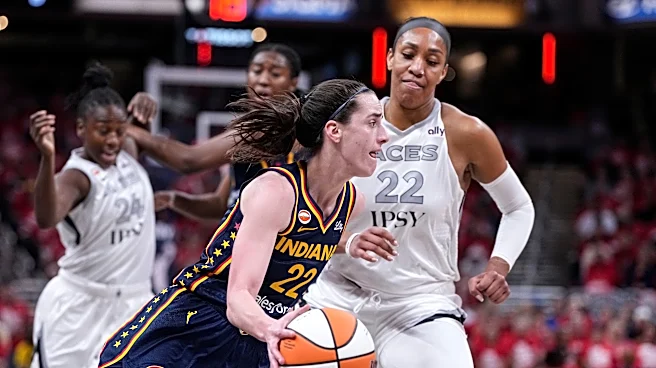
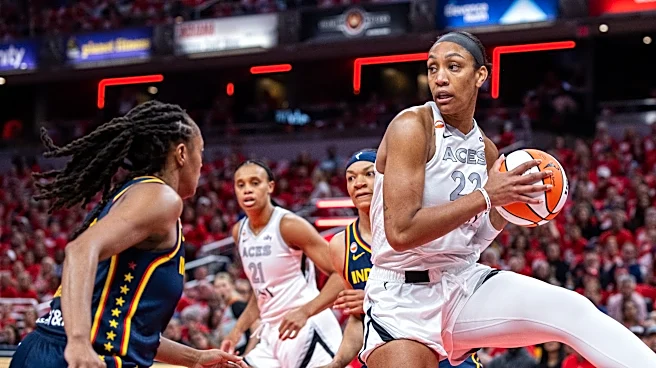
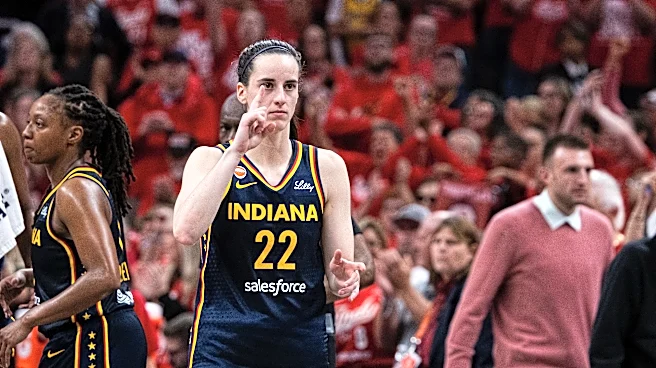
The WNBA has ruled that A'Ja Wilson, a player, did not violate league rules when she confronted an Indiana Fever fan during a game. The incident occurred when Wilson approached a fan who was reportedly pointing at her from the court-side. While WNBA rules state
that any coach, player, or trainer who deliberately enters the spectator stands will be automatically ejected, the league determined that Wilson remained in the 'player escape lane' adjacent to the stanchion, rather than entering the stands. Consequently, no ejection or punishment was issued to Wilson or her teammates, Kalani Brown and Kierstan Bell, who also left the bench during the confrontation. The Indiana Fever had previously reviewed the incident and concluded there was no violation of their Fan Code of Conduct by the fan, who was not removed from the arena.
Why It's Important?
This ruling is significant as it sets a precedent for how the WNBA interprets its rules regarding player-fan interactions and the boundaries of the playing area. By distinguishing between the 'player escape lane' and the 'stands,' the league has provided a specific interpretation that could influence future incidents. The decision also highlights the ongoing tension between player safety, fan conduct, and the enforcement of league regulations. For players, it might offer a clearer understanding of permissible actions during heated moments. For fans, it underscores the importance of adhering to codes of conduct and the potential for direct interaction with players, even if within defined boundaries. The controversy also brings attention to the broader issue of fan behavior at sporting events and the measures leagues take to protect their athletes.
What's Next?
The WNBA's clarification of the 'player escape lane' could lead to further discussions or refinements of its rulebook to ensure clarity for all stakeholders. Teams and players may receive additional guidance on how to navigate similar situations in the future, potentially leading to new protocols for managing player-fan interactions. The incident might also prompt a review of fan codes of conduct across the league to address behaviors that could provoke confrontations. While the matter is considered closed by the WNBA, the public and media reaction to the ruling could influence how such incidents are perceived and handled in the future, potentially leading to calls for stricter enforcement or clearer definitions of boundaries to prevent similar occurrences.
Beyond the Headlines
This incident and the WNBA's ruling delve into the complex dynamics of athlete-fan relationships in professional sports. It highlights the emotional intensity of live games and the fine line between passionate support and disruptive behavior. The league's decision to differentiate between the 'player escape lane' and the 'stands' reflects an attempt to balance player protection with the practicalities of game-day operations. However, it also raises questions about the perceived fairness and consistency of rule enforcement, especially when public opinion might differ from official interpretations. The broader cultural implications include discussions about respect, boundaries, and the responsibilities of both athletes and spectators in maintaining a positive and safe environment at sporting events, reflecting evolving societal expectations for conduct in public forums.