






What's Happening?
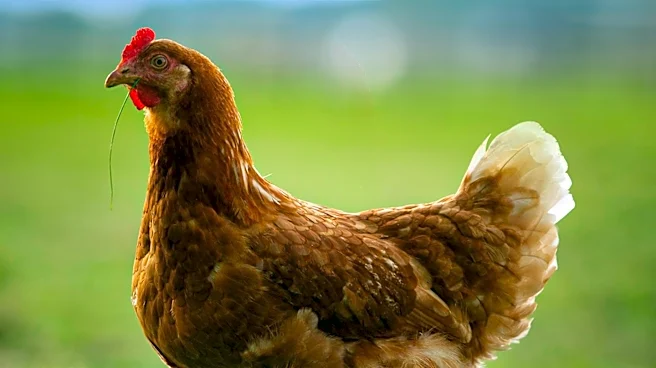
Cargill is committing over $130 million in investments over the next two years to significantly expand its poultry operations across Asia, specifically in Thailand and the Philippines. This strategic move is driven by the accelerating global demand for
protein and a growing consumer preference for high-quality cooked poultry products. The investment will focus on enhancing capacity and efficiency throughout Cargill’s poultry network in these countries, aiming to bolster supply chain resilience and improve food safety, quality, and innovation for its global foodservice and retail customers. A key part of this expansion includes the deployment of advanced technologies to optimize production processes and reduce costs. In Thailand, a new automated cooked chicken production line is planned for Cargill’s poultry processing plant in Saraburi, with completion expected by 2028. Additionally, Cargill will construct a new 30,000-metric-ton grain silo in Thailand to improve raw material storage and procurement flexibility. In the Philippines, investments include a new feed mill with an annual production capacity of 190,000 metric tons, expected to be completed by late 2027, and the expansion of hatcheries, breeder, and broiler farms.
Why It's Important?
This substantial investment by Cargill underscores the increasing global reliance on poultry as a primary protein source and highlights the strategic importance of Asian markets in meeting this demand. For the U.S., while the direct investment is in Asia, it reflects broader trends in the global food supply chain and protein consumption that can influence U.S. agricultural exports and international trade policies. The focus on advanced technologies, including Artificial Intelligence (AI) for data processing, indicates a shift towards more efficient and technologically driven food production, which could set new industry standards globally and potentially influence U.S. agricultural practices. The expansion aims to increase Cargill's total cooked poultry volume to approximately 160,000 metric tons, generating significant export value for Thailand and creating over 300 local jobs. This growth in Asian production could impact the competitive landscape for U.S. poultry producers in international markets, particularly in regions where Cargill currently exports from Thailand, such as Japan, Europe, Asia, and North America. Furthermore, strengthening supply chain resilience and enhancing food safety in a major global food producer like Cargill has implications for global food security and consumer confidence worldwide, including in the U.S.
What's Next?
Over the next two years, Cargill will proceed with significant technological upgrades, integrating state-of-the-art machinery and AI into its data processing to facilitate faster and more accurate decision-making. The new automated cooked chicken production line in Saraburi, Thailand, is slated for completion by 2028, while the new grain silo in Thailand is expected to be finished by early 2027. In the Philippines, the new feed mill is projected to be operational by late 2027. These developments are anticipated to increase Cargill’s total cooked poultry volume and generate substantial export value for Thailand, alongside creating new employment opportunities in both Thailand and the Philippines. The company will continue to strengthen its supply and cost efficiencies to better serve its domestic foodservice customers and consumers of its 'Tip-Top' retail brand in the Philippines. The success of these expansions will likely influence future investment decisions by Cargill and other major food corporations in response to evolving global protein demand and technological advancements in food production.
Beyond the Headlines
Cargill's investment goes beyond mere capacity expansion; it signifies a deeper commitment to integrating advanced technology and AI into the agricultural supply chain. This move could set a precedent for how large-scale food production adapts to global demands, emphasizing efficiency, food safety, and sustainability. The creation of new jobs and income opportunities for local farmers in Thailand and the Philippines highlights the socio-economic impact of such large-scale investments in developing economies. It also raises questions about the long-term implications for traditional farming practices and the potential for technological displacement in certain areas of the food industry. The focus on strengthening supply chain resilience is particularly pertinent in an era of increasing global disruptions, from climate change to geopolitical events, suggesting a strategic shift towards more robust and adaptable food systems. This investment also underscores the growing importance of high-quality, cooked poultry products in global diets, reflecting changing consumer preferences and the increasing demand for convenient and safe food options.