





What's Happening?
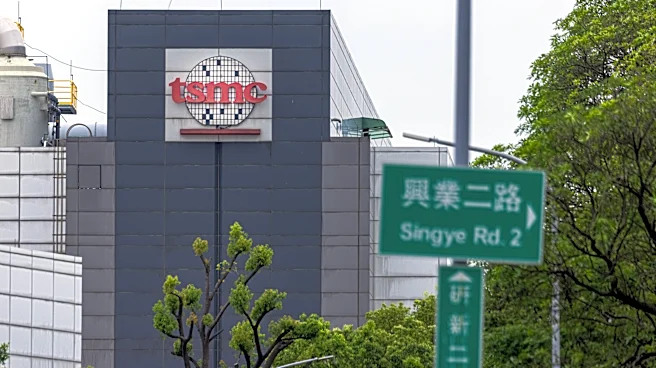
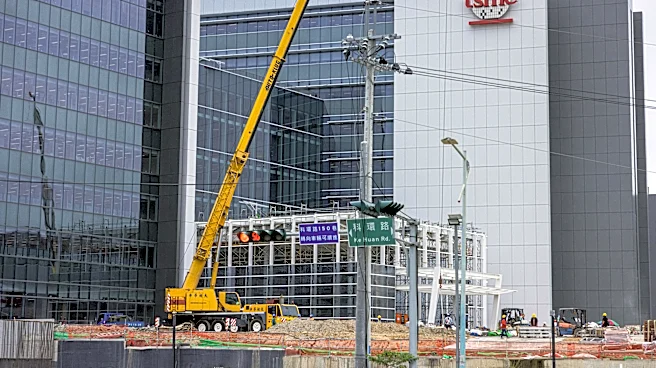
TSMC, the world's largest contract chipmaker, is considering a $22.6 billion semiconductor manufacturing facility in Brazos County, Texas. This proposed plant would produce advanced chips using 2-nanometer or smaller manufacturing technology and is projected
to create at least 2,099 direct jobs with an average annual salary of approximately $133,000. However, the company's decision to build in Texas is contingent on securing two critical tax breaks. One is a state-level property tax break that would halve the property taxes paid towards local school operating costs for 10 years. The other is a federal tax credit, worth 35% of qualifying semiconductor manufacturing investments, which is set to expire soon. TSMC has indicated that without the state tax incentive, Texas would be at a 'severe competitive disadvantage' compared to Arizona, where the company already has established manufacturing operations.
Why It's Important?
This potential investment by TSMC is significant for the U.S. semiconductor industry and national economic policy. The development of advanced chip manufacturing capabilities within the U.S. is a key component of efforts to reduce reliance on foreign supply chains and bolster national security in critical technology sectors. The creation of over 2,000 high-paying jobs would also provide a substantial economic boost to the region. The competition between Texas and Arizona for this facility highlights the intense interstate rivalry for major industrial investments, often driven by tax incentives. The federal tax credit's impending expiration underscores the urgency for legislative action to support domestic chip manufacturing, impacting the U.S.'s ability to attract and retain high-tech industries.
What's Next?
The future of TSMC's Texas plant hinges on several upcoming decisions. The state-level property tax break requires approval from both the governor's office and the local school board. The application process suggests that the decision may fall to Democrat Gina Hinojosa, who is set to take office in January and has previously campaigned against tax breaks for data centers. Concurrently, the federal tax credit faces a deadline, as construction must begin by December 31 to qualify, though TSMC's application projects spending to start in 2027. Senators John Cornyn (R-TX) and Mark Kelly (D-AZ) have introduced legislation to extend this federal tax break by five years, indicating a bipartisan effort to secure such investments. The outcome of these legislative and local approval processes will determine whether Texas or Arizona secures TSMC's next major U.S. manufacturing campus.
Beyond the Headlines
The competition for TSMC's investment extends beyond immediate economic benefits, touching upon broader themes of industrial policy and geopolitical strategy. The push for domestic semiconductor manufacturing reflects a global trend of nations seeking to onshore critical technologies, driven by supply chain vulnerabilities exposed during recent global events and increasing geopolitical tensions. The reliance on tax incentives to attract such large-scale projects raises questions about the long-term sustainability and fairness of such economic development strategies, potentially creating a 'race to the bottom' among states. Furthermore, the political dynamics surrounding the tax breaks, particularly the stance of incoming officials, highlight the evolving landscape of state-level economic development policies and the balance between attracting investment and ensuring fiscal responsibility.