


What's Happening?
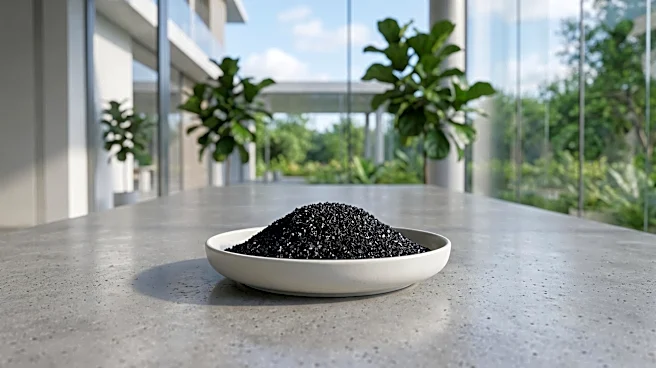
Plantd, a North Carolina-based company known for its grass-based construction panels, has introduced a new biochar product line. This initiative aims to convert biomass waste generated from its construction panel manufacturing into a valuable soil amendment
for the agricultural industry. Previously, Plantd incurred approximately $13,000 monthly in waste removal costs. Cofounder and CEO Nathan Silvernail identified biochar, a carbon-rich material used by farmers for millennia, as a solution. The company's biochar is produced by heating biomass in the absence of oxygen, converting CO2 into durable carbon. Plantd claims its biochar is a premium product, offering benefits such as improved crop disease resistance due to high silica content, better water retention, enhanced soil structure, and natural pH elevation. This development moves Plantd closer to its goal of a fully closed-loop manufacturing system, where every part of the process becomes a product, including potentially using the biochar gasification process as an energy source for its operations.
Why It's Important?
This development is significant for the U.S. agricultural and construction industries, offering a dual solution to waste management and soil health. For the construction sector, it demonstrates a viable model for converting industrial byproducts into revenue streams, potentially reducing landfill waste and operational costs. For agriculture, the biochar product provides farmers with a sustainable soil amendment that can decrease reliance on synthetic fertilizers, improve soil quality, and potentially increase crop resilience. The ability to sequester carbon through biochar also presents opportunities for carbon credit strategies, aligning with broader environmental sustainability goals. This innovation highlights a growing trend in the U.S. towards circular economy principles, where waste is re-envisioned as a resource, fostering economic and environmental benefits across multiple sectors. The model could inspire other industries to explore similar waste-to-value conversions, contributing to a more sustainable national economy.
What's Next?
Plantd plans to further integrate the biochar production into its manufacturing process, aiming for a zero-waste model where the gasification of biomass into biochar also generates electricity and heat for its operations. The company is currently collaborating with agricultural solutions provider Qualterra, which has helped establish an initial customer base for the soil amendment product. Future efforts will likely focus on scaling production, expanding its agricultural customer base, and potentially developing a carbon credit strategy based on the carbon sequestration capabilities of its biochar. The company also intends to transition its all-electric machine for construction panels to solar and wind power, further enhancing its sustainability profile. This holistic approach suggests a continued push towards environmental and economic efficiency, with potential for broader adoption of similar practices in U.S. manufacturing and agriculture.
Beyond the Headlines
The deeper implication of Plantd's biochar initiative lies in its potential to redefine industrial waste as a valuable input for other sectors, fostering a more interconnected and resilient economy. This approach challenges traditional linear production models by demonstrating that sustainability can be a driver of cost efficiency and new revenue streams, rather than just an expense. Ethically, it promotes responsible resource management and reduces environmental impact, particularly in waste disposal and chemical fertilizer use. Culturally, it reinforces the idea that innovative solutions can emerge from interdisciplinary thinking, combining insights from aerospace engineering (as per CEO Nathan Silvernail's background) with agricultural science. This model could contribute to a paradigm shift in how U.S. businesses approach manufacturing and resource utilization, emphasizing ecological balance and long-term economic viability.