






What's Happening?
Kagoshima has officially overtaken Shizuoka as Japan's largest tea producer by volume in 2024, marking a significant shift in the country's tea industry. Government figures indicate Kagoshima's crude tea output reached approximately 27,000 tonnes, compared
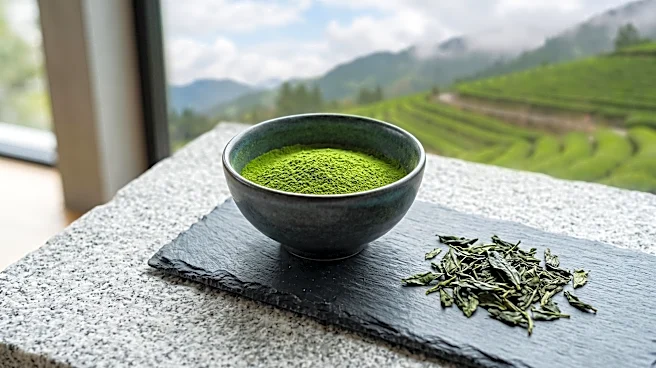
to Shizuoka's 25,800 tonnes. This development is attributed to Kagoshima's strategic investments in large, flat tea estates that are conducive to mechanization, contrasting with Shizuoka's often steep hillsides that are harder to cultivate with modern machinery. Additionally, Kagoshima's mild winters allow for the earliest new-season tea harvest, known as hashiri-shincha, starting in late March, weeks ahead of most other regions. The prefecture also benefits from volcanic soil, enriched by ash from Sakurajima and the Kirishima range, which is ideal for tea cultivation. This rise in production includes a significant increase in tencha, the leaf used for matcha, with Kagoshima producing 1,392 tonnes in 2022, more than any other prefecture, including Kyoto.
Why It's Important?
This shift in tea production leadership has substantial implications for the global tea market, particularly for matcha consumers in the U.S. As Kagoshima becomes the primary source of tencha, it could influence the availability, pricing, and flavor profiles of matcha products imported into the U.S. Consumers might see more matcha labeled with Kagoshima origins, potentially offering a brighter, less bitter taste profile compared to traditional Uji matcha. The increased mechanization in Kagoshima could lead to more consistent supply and potentially more competitive pricing for certain grades of matcha. For U.S. businesses in the tea industry, understanding this change is crucial for sourcing strategies and marketing efforts, as the origin of tea is often a key selling point. The emphasis on single-cultivar matcha from Kagoshima also presents an opportunity for greater diversity in the U.S. specialty tea market, allowing consumers to explore different flavor nuances.
What's Next?
The competition between Kagoshima and Shizuoka is expected to continue, with the two prefectures likely to trade places in production volume in the future. However, Kagoshima's sustained investment in large-scale, mechanized farming suggests its position as a major tea producer will remain strong. For U.S. importers and tea retailers, this means a continued focus on Kagoshima as a key sourcing region for both sencha and matcha. Consumers can anticipate a wider variety of Kagoshima-sourced teas becoming available, with an emphasis on freshness and specific cultivars. The trend of growers converting fields to shaded tencha production in Kagoshima is likely to accelerate, further solidifying its role in meeting the growing global demand for matcha. Industry stakeholders will need to monitor these production trends to adapt their supply chains and product offerings accordingly.
Beyond the Headlines
The rise of Kagoshima highlights a broader trend in agricultural production towards efficiency and scale, driven by technological advancements and climate advantages. While Uji still holds a strong reputation for ceremonial-grade matcha due to its deep tradition and refinement, Kagoshima's focus on volume and diverse cultivars represents a modernization of the tea industry. This shift also brings into focus the importance of terroir and cultivation methods, as Kagoshima's unique volcanic soil and climate contribute to distinct flavor characteristics. For consumers, this means a richer and more varied experience in the world of Japanese tea, moving beyond traditional regional monopolies. The increasing availability of organic matcha from Kagoshima also reflects a growing consumer demand for sustainably produced goods, influencing ethical sourcing practices within the U.S. tea market.