






What's Happening?
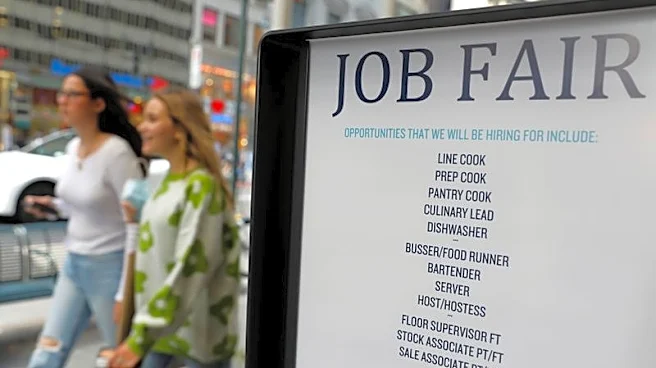
Hiring in the U.S. slowed significantly in June, with nonfarm payrolls increasing by just 57,000, according to the Bureau of Labor Statistics. The unemployment rate fell to 4.2%, but this was accompanied by a drop in labor force participation to its lowest
level in over five years. The leisure and hospitality sector saw the largest decline in jobs, while healthcare and social assistance continued to lead in job creation. The report suggests that despite some economic resilience, employers remain cautious amid high prices and global uncertainties.
Why It's Important?
The sharp slowdown in hiring highlights ongoing economic challenges, including inflation and consumer spending concerns. This could impact the Federal Reserve's monetary policy, as the current job growth pace may not necessitate immediate interest rate hikes. The decline in labor force participation, particularly among prime-age workers, underscores the need for policies that address workforce engagement and economic stability. The uneven job growth across sectors reflects broader economic uncertainties that could affect future hiring and wage trends.
What's Next?
The Federal Reserve is likely to maintain its current interest rate stance, focusing on inflation and economic growth indicators. Employers may continue to exercise caution in hiring, especially in sectors vulnerable to economic shifts. The labor market's trajectory will depend on factors such as consumer confidence, inflation trends, and potential policy changes. Stakeholders will be closely monitoring any signs of economic stabilization or further disruptions that could impact hiring and wage growth.