



What's Happening?
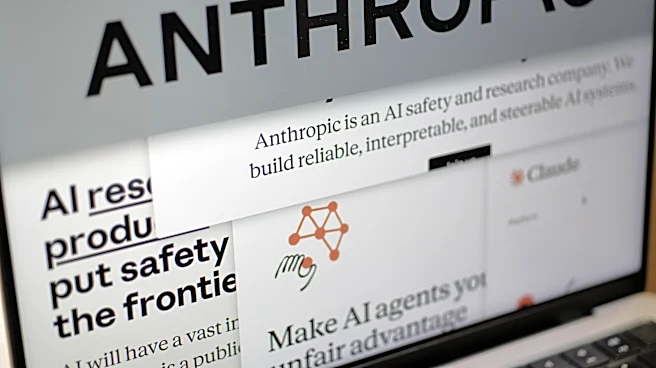
John Schulman, an original co-founder of OpenAI, joined Anthropic in August 2024. This move was part of a broader trend of top AI researchers shifting between leading AI labs. However, Schulman's tenure at Anthropic was relatively brief, as he departed
in February 2025 to join Mira Murati’s Thinking Machines Lab. This movement of key talent highlights the intense competition and dynamic landscape within the artificial intelligence sector, where researchers are drawn by team composition and strategic vision rather than solely compensation. Schulman was also a co-author on the 2022 InstructGPT paper, which demonstrated how human judgment could improve language model responses, and was part of the larger team acknowledged in the launch of ChatGPT in November 2022. His contributions have been significant in the development of advanced AI models.
Why It's Important?
The movement of high-profile AI researchers like John Schulman between companies such as OpenAI, Anthropic, and Thinking Machines Lab underscores the critical role of talent in the rapidly evolving AI industry. These shifts can significantly impact the strategic direction and technological advancements of the companies involved. For the U.S. AI sector, this fluidity of talent indicates a highly competitive environment where innovation is driven by the assembly of elite research teams. Companies that can attract and retain such talent are better positioned to lead in the development of next-generation AI. This also suggests that the 'bet' or the core mission and team culture are powerful motivators for top researchers, potentially more so than financial incentives alone, influencing the competitive landscape and future of AI development in the nation.
What's Next?
The continued movement of top AI talent is likely to fuel further innovation and competition among leading AI firms. Companies will likely intensify their efforts to create compelling research environments and strategic visions to attract and retain key individuals. This could lead to more rapid advancements in AI capabilities as researchers bring diverse experiences and perspectives to new projects. The U.S. AI industry may see new collaborations or spin-off ventures as these researchers explore novel applications and foundational models. The focus will remain on building strong research teams and fostering environments that encourage groundbreaking work, potentially leading to new AI products and services that could reshape various industries.
Beyond the Headlines
The frequent migration of AI pioneers like John Schulman points to a deeper phenomenon within the tech industry: the increasing value placed on intellectual capital and specialized expertise. This trend could lead to a more decentralized innovation ecosystem, where breakthroughs are not confined to a single dominant entity but emerge from a network of interconnected labs and research groups. Ethically, the rapid movement of talent raises questions about intellectual property and the potential for knowledge transfer across competing organizations. Legally, non-compete clauses and confidentiality agreements may face increased scrutiny in this highly fluid environment. Culturally, it fosters a dynamic where individual researchers hold significant leverage, shaping the future trajectory of AI development through their choices of affiliation and research focus.