






What's Happening?
In Singapore, there is a growing emphasis on screen-free learning for preschoolers, an approach where children primarily learn through hands-on exploration, movement, storytelling, social interaction, and real-world experiences, rather than passive screen use.
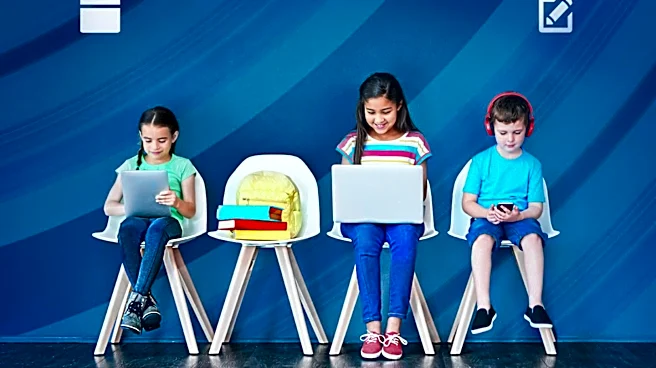
This method is gaining traction among parents who are concerned about the potential negative impacts of excessive screen exposure on young children's attention span, communication skills, emotional regulation, and social confidence. Experts suggest that children between 18 months and 6 years old learn most effectively through direct engagement with their surroundings, including exploring textures, sounds, materials, and physical spaces. Screen-free learning environments encourage activities like building, sorting, drawing, pretending, and interacting with peers and teachers, which are crucial for developing coordination, spatial awareness, curiosity, independence, and problem-solving abilities.
Why It's Important?
The early childhood years are critical for foundational development, and screen-free learning supports this by fostering active participation and sensory exploration. Unlike digital tools that often provide rapid visual stimulation with limited physical interaction, hands-on experiences strengthen attention span, working memory, reasoning, and problem-solving skills. This approach is vital for cognitive development, as children learn more effectively when actively involved in the learning process. Furthermore, screen-free environments promote social and emotional development by encouraging direct interaction, allowing children to practice speaking, listening, sharing, and expressing emotions. These experiences are essential for building empathy, managing emotions, and forming positive relationships, which are fundamental for school readiness and long-term social competence.
What's Next?
Parents are encouraged to support screen-free learning at home by engaging in activities such as reading physical books, involving children in daily routines like cooking, and encouraging open-ended play with art materials or puzzles. Setting clear and consistent boundaries around screen use, especially before bedtime, and modeling balanced screen habits as adults are also crucial. For preschools, the focus will continue to be on creating intentional learning environments with purposeful learning corners, motor skills activities, and outdoor discovery spaces. The goal is not to completely eliminate technology but to ensure it supports learning intentionally, rather than replacing meaningful real-world experiences. This balanced approach aims to equip children with the necessary skills for future learning while fostering curiosity, confidence, and a love for active exploration.
Beyond the Headlines
The movement towards screen-free learning for preschoolers reflects a broader societal concern about the impact of digital technology on child development. It highlights a growing recognition that while technology offers benefits, its uncritical adoption in early education may hinder the development of essential cognitive, social, and emotional skills. This approach challenges the notion that all digital learning tools are inherently educational for young children, advocating instead for a return to more traditional, hands-on, and interactive learning methods. The long-term implications could include a generation of children with stronger foundational skills in critical thinking, problem-solving, and interpersonal communication, potentially leading to a more balanced and resilient society in the face of increasing digitalization. It also underscores the importance of parental involvement and conscious choices in shaping children's early learning experiences.