






What's Happening?
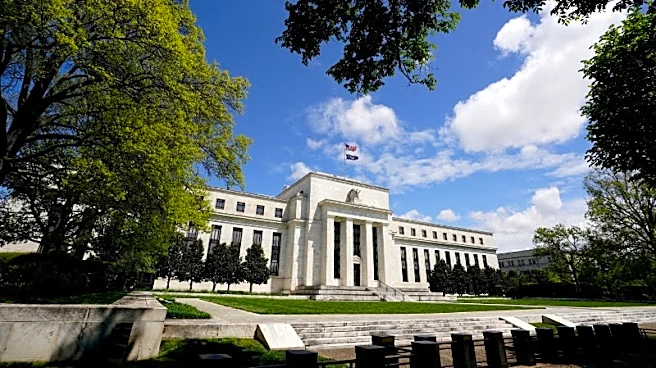
The Federal Reserve System, established in 1913, serves as the central bank of the United States. It performs four primary functions: conducting monetary policy to influence credit costs, acting as a lender of last resort for solvent banks, supervising
and regulating a significant portion of the banking system, and operating core payment infrastructure. The system is composed of a public Board of Governors in Washington D.C., whose members are nominated by the President and confirmed by the Senate for 14-year terms, and twelve regional Federal Reserve Banks. These regional banks, such as the Federal Reserve Bank of Cleveland, are structured as corporations where member commercial banks are required to buy stock. However, this stock does not confer meaningful control over monetary policy, cannot be traded, and pays a statutorily capped dividend. Any remaining profits after expenses and dividends are remitted to the U.S. Treasury, often amounting to tens of billions of dollars annually. This unique hybrid structure often leads to misconceptions about its ownership and private nature.
Why It's Important?
Understanding the Federal Reserve's structure and functions is crucial for comprehending the U.S. economy. Its monetary policy decisions, such as setting the federal funds rate target, indirectly influence a wide range of interest rates, including mortgage rates and business loan rates, impacting consumers and businesses nationwide. The Fed's role as a lender of last resort helps maintain financial stability by preventing liquidity crises from escalating into broader systemic failures. Its supervisory and regulatory activities ensure the soundness of the banking system, protecting depositors and the financial markets. Furthermore, by operating payment systems, the Fed facilitates the smooth flow of transactions across the country. The clarification of its independent, hybrid public-private nature is vital to dispel myths and foster informed public discourse on its critical role in economic management and stability.
What's Next?
The Federal Reserve will continue to execute its dual mandate of achieving maximum employment and stable prices, alongside moderate long-term interest rates. Its Federal Open Market Committee (FOMC) will meet approximately eight times a year to make interest rate decisions, which are then communicated to the public. These decisions, while seemingly small, have far-reaching consequences for financial markets and the broader economy. The Fed will also continue to adapt its operational mechanisms, such as its post-2008 floor system for interest on reserves, to effectively manage monetary policy in evolving economic conditions. Ongoing communication from Fed officials, known as forward guidance, will remain a key tool to shape market expectations about future policy actions, influencing long-term rates without immediate changes to the overnight rate.
Beyond the Headlines
The Federal Reserve's unique structure as a hybrid entity, balancing centralized federal control with regional banking interests, reflects a historical compromise designed to prevent banking panics. This design, while effective, often fuels public debate and conspiracy theories regarding its ownership and influence. The Fed's inability to directly control all interest rates or solve supply-side economic problems highlights the limitations of monetary policy and the complex interplay between various economic factors. Its decisions are made by a group of individuals exercising judgment under uncertainty, using imperfect models, and navigating a mandate that can present conflicting objectives. This underscores the ethical and philosophical challenges inherent in central banking, where decisions have significant distributional effects and require careful consideration of trade-offs, particularly when inflation and employment goals diverge.