





What's Happening?
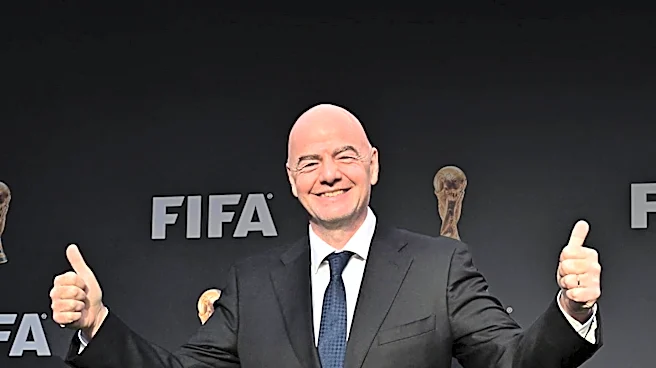
Former FIFA president Joseph Blatter has stated that UEFA, European football's governing body, is preparing to announce a candidate to challenge incumbent Gianni Infantino for the FIFA presidential election next year. Blatter, who was FIFA president from
1998 to 2015, indicated that UEFA has a plan and will reveal its opposing candidate in the coming weeks. UEFA reportedly withdrew its support for Infantino after he proposed a controversial World Cup private investor plan, which was later abandoned due to rejection from three continental confederations and a boycott threat from UEFA. Despite this, Infantino has secured support from Africa, Asia, and South America, which could provide him with a majority for a fourth term. The deadline for candidate submissions is next Wednesday, with former Arsenal coach Arsène Wenger reportedly considering a run.
Why It's Important?
This development signals a significant power struggle within international football governance, with potential implications for the sport's future direction, including major tournaments and financial policies that could affect U.S. soccer. A contested election could lead to shifts in FIFA's priorities, potentially influencing decisions on World Cup hosting bids, development programs, and commercial strategies. For U.S. soccer, which is increasingly integrated into the global football ecosystem, changes in FIFA leadership could impact its standing, access to resources, and influence within the organization. The U.S. has a vested interest in a stable and transparent FIFA, especially with the upcoming FIFA World Cup 2026™ co-hosted with Canada and Mexico. The outcome of this election could determine the leadership's approach to these major events and the broader commercialization of the sport.
What's Next?
The immediate next step is the upcoming deadline for candidate submissions next Wednesday. UEFA is expected to announce its chosen candidate in the coming weeks, potentially setting the stage for a direct challenge to Gianni Infantino. Arsène Wenger's decision on whether to run will also be a key factor. The campaigning period will likely involve candidates outlining their visions for FIFA's future, addressing issues such as governance, financial transparency, and football development. The election in March will then determine the leadership for the next term. The support Infantino has garnered from other confederations suggests a potentially close contest, with the outcome having long-term effects on FIFA's global policies and relationships with continental bodies.
Beyond the Headlines
The anticipated challenge to Gianni Infantino's presidency highlights ongoing tensions and differing visions for FIFA's future, particularly concerning financial models and governance. The controversy surrounding the World Cup private investor plan underscores a fundamental disagreement over the commercial direction of the sport and the distribution of power within FIFA. This internal political dynamic could lead to a more robust debate about FIFA's role in global football, its financial practices, and its commitment to transparency. For the U.S., as a significant market and host of future major tournaments, the stability and integrity of FIFA's leadership are paramount. The election could either reinforce existing power structures or usher in a new era of governance, potentially impacting how global football events are organized and how revenues are generated and distributed, which could have indirect effects on U.S. soccer's strategic planning and international collaborations.