



What's Happening?
European corporations are increasingly feeling the impact of China's economic slowdown, with a record number of mentions of China during third-quarter earnings calls across the Stoxx Europe 600. This pressure is no longer confined to luxury goods and
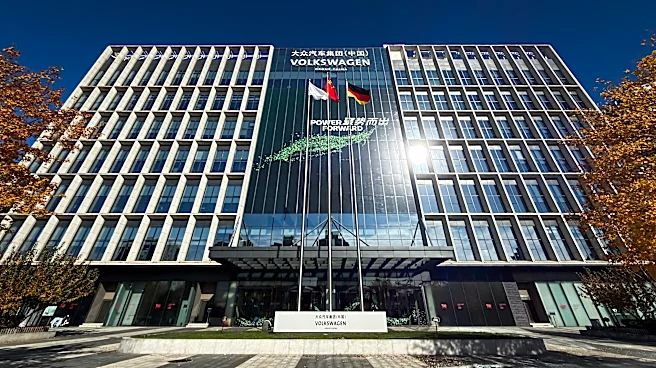
automotive sectors but has extended into medtech, beverages, consumer health, hospitality, industrials, and chemicals. A prolonged property slump in China has eroded household wealth and spending, while increasingly competitive local players, particularly in electric vehicles, are challenging European brands. Luxury brands like Gucci, Hermès International SCA, and LVMH Moët Hennessy Louis Vuitton SE have reported soft demand, complicating Kering SA's turnaround efforts. Automakers such as Mercedes-Benz Group AG and Volkswagen AG have cut profit guidance and seen sales declines, with BMW AG planning accelerated model launches to counter local rivals.
Why It's Important?
This widespread impact on European companies underscores the interconnectedness of the global economy and the significant role China plays as a consumer market and manufacturing hub. The slowdown affects U.S. industries indirectly through global supply chains and investment flows, as European companies may re-evaluate their strategies and investments, potentially impacting U.S. partners or competitors. The shift in consumer behavior and the rise of competitive local players in China signal a challenging environment for foreign brands, forcing them to adapt their strategies or face declining market share. This situation could lead to a broader re-evaluation of global market dependencies and diversification efforts by multinational corporations, including those with U.S. ties, to mitigate risks associated with concentrated market exposure.
What's Next?
European companies are expected to continue adjusting their strategies in response to the challenging Chinese market. This may involve accelerating new product launches, localizing production, or re-evaluating their market presence. The European Union is also considering import restrictions in certain sectors, which could potentially improve sentiment for some struggling industries. Investors will need a broader lens to assess the impact, focusing on factors like product sourcing, pricing strategies, and capital allocation. While some companies like Siemens AG and Burberry Group Plc have shown resilience, the overall outlook suggests continued subdued domestic spending and property investment in China, indicating that a significant rebound for European firms may not be imminent. The situation highlights the need for ongoing monitoring of EU trade shifts and corporate earnings calls for insights into future market trends.
Beyond the Headlines
The deepening impact of China's economic challenges on diverse European sectors reveals a fundamental shift in global trade dynamics. Beyond immediate financial implications, this trend highlights the growing assertiveness and competitiveness of Chinese domestic industries, particularly in high-tech and consumer goods. This could lead to a long-term rebalancing of global economic power and a re-evaluation of globalization strategies by Western companies. Ethical and legal considerations may arise as companies navigate complex market conditions, potentially leading to increased scrutiny of trade practices and intellectual property. The situation also underscores the importance of economic diversification and resilience for nations and corporations alike, as over-reliance on any single market can expose them to significant vulnerabilities during economic downturns.